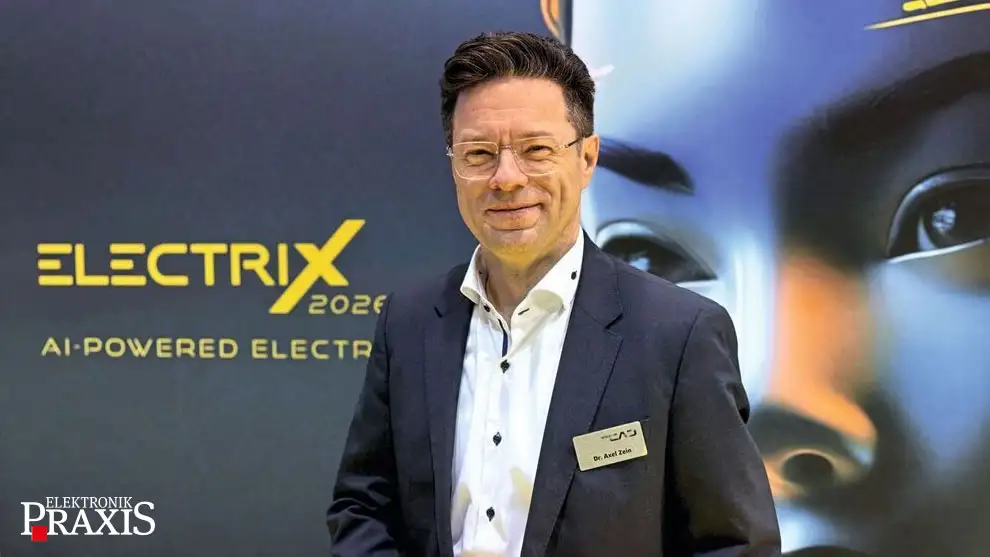
Interview with WSCAD CEO Dr. Axel Zein for the german trade magazine Automation NEXT (January 2026)
AI in Engineering: From a Tool to a Virtual Team Member
„Humans will then become almost like a kind of team leader”
In an interview with the german trade magazine Automation NEXT, Dr. Axel Zein, CEO of WSCAD, discusses the current state and future potential of artificial intelligence in engineering. His assessment is unambiguous: despite the widespread attention AI receives, its role in classical engineering disciplines is still marginal. “In general, we are still at the very beginning of AI in engineering – really at the very beginning,” says Zein. While AI has already reached a comparatively high level of maturity in software development, it is “almost non-existent” in areas such as electrical engineering, mechanics or PCB design.
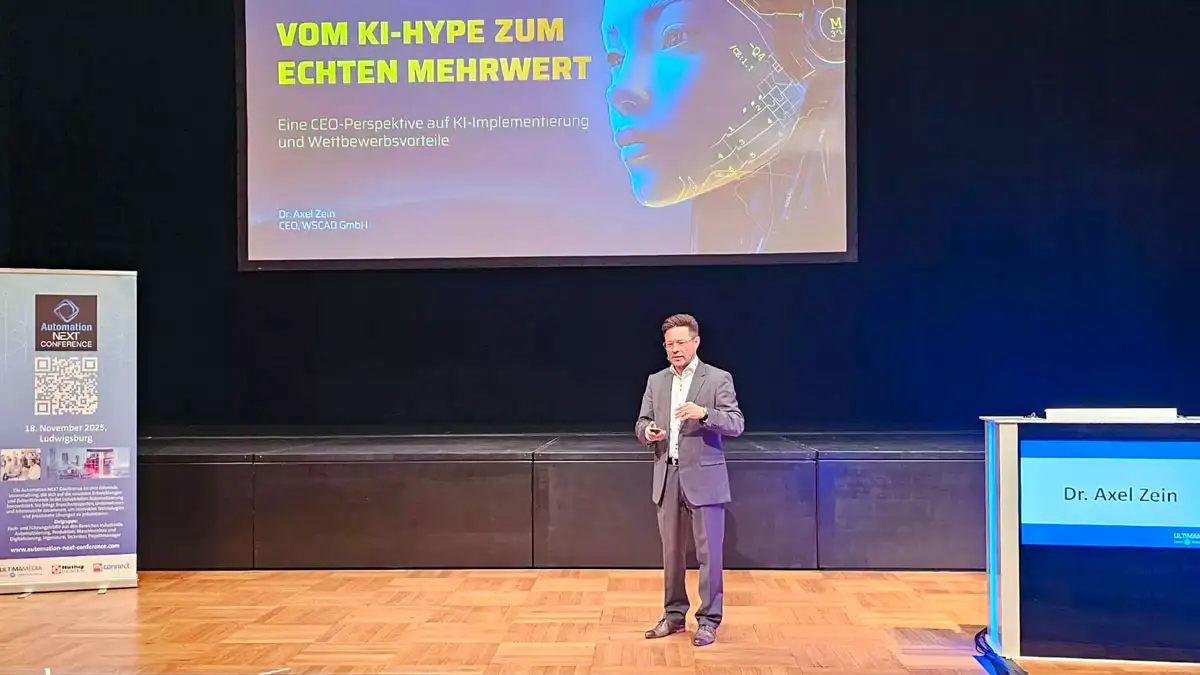
At the Automation NEXT Conference 2025, Dr. Axel Zein, CEO of WSCAD GmbH, demonstrated from a manufacturer’s perspective how engineering processes can not only be optimized but fundamentally changed by AI.
According to Zein, one of the main reasons lies in how many companies approach the topic. Too often, the focus is placed on technology instead of real benefits. “The most important question at the beginning of any AI project is not: ‘Which technology are we using?’ but: ‘What problem do we want to solve?’” Identifying meaningful use cases is essential. This requires the structured combination of data, developer expertise and domain knowledge, as well as people who are willing to think differently. “This working out of possible use cases is fundamental – before you even think about tools or technology,” Zein emphasizes, adding that this phase is often significantly underestimated.
Mindset is another decisive factor. Openness alone is not enough; organizations must also be prepared to change the way they work. Zein draws a parallel to automation in manufacturing: “The employee no longer welded themselves but learned to set up and monitor the robot.” Engineering is undergoing a similar transformation. Engineers are not becoming obsolete, but their role is changing. AI already enables certain engineering tasks to be completed much faster today, sometimes in only a fraction of the time. The result: more projects can be handled within the same timeframe.
Trust plays a central role in this transformation – both with regard to job security and the reliability of AI-generated results. Zein stresses that engineering must never rely solely on AI models. “AI can hallucinate.” For this reason, WSCAD combines AI models with strict rule-based systems. “This produces robust results – and thus trust.” Only through this combination can acceptance be achieved in safety-critical engineering environments.
Looking ahead, Zein sees AI evolving from a supporting feature into an active participant in engineering processes. Current AI functions in CAD systems make individual tasks easier, but they are not yet disruptive. “What we see today is just the beginning,” he says. The real transformation begins when AI takes over substantial parts of engineering work. WSCAD has taken an initial step with automatic control cabinet generation, but for Zein, this is only the start.
“Our vision is a system that acts like an experienced electrical designer,” Zein explains. The user defines requirements, the system asks follow-up questions, proposes solutions and performs the design. “The human then becomes almost like a team leader, guiding a virtual designer.” With existing solutions, some customers are already achieving time savings of up to 50 percent. If AI were to assume much larger portions of engineering tasks, the impact would be significantly greater.
When it comes to timelines, Zein remains cautious. Initial developments could become visible around 2027, but engineering presents unique challenges. It requires the interplay of strict rules on the one hand and creative reasoning on the other. How quickly AI-based systems will master this balance remains uncertain. “I wouldn’t have thought twelve months ago that we would be at this point today – and I expect more surprises,” Zein notes.
For companies looking to start with AI in engineering now, Zein’s advice is pragmatic: begin with a small, motivated team, identify concrete use cases and prioritize them based on impact and effort. Start small, deliver results quickly and communicate progress transparently. Equally important is support from top management. “Either it is important, then the leadership level must pay attention. Or it is not important – then maybe it should just be left alone.”
This article is intended for your personal use only. Reproduction or publication requires the express written consent of the publisher.