
Bruckmann Steuerungstechnik (BSG) Case Study
The Problem:
Time pressure, skills shortages and shorter development cycles are accelerating automation in machinery and plant manufacturing. BSG demonstrates how automated electrical engineering design boosts efficiency and productivity.
The WSCAD Solution:
The company uses an in-house configuration tool integrated with its ERP system to manage electrical engineering design, switch cabinet configuration and PLC programming. This streamlined workflow improves efficiency, reduces manual effort and ensures greater accuracy throughout the engineering process.
BSG Achieves Up to 90% Faster Project Planning with Automated Electrical Engineering Using WSCAD and ONEtool
Time pressure, a shortage of skills and ever-decreasing development cycles are forcing machinery and plant construction companies to take increasingly streamlined rationalisation and automation measures. Under pressure and in the middle of it all are the switchgear manufacturers: one such manufacturer – Bruckmann Steuerungstechnik GmbH in North Rhine-Westphalia – shows how much potential lies in automated electrical engineering design.
At a Glance
Customer
- Bruckmann Steuerungstechnik GmbH (BSG), Uedem Supplier of high-efficiency automation solutions including switchgear construction
- www.bsg.de
Challenge
- Wide range of variants
- Time-consuming coordination between Purchasing and Development
- High production costs
Solution
- Application of an in-house configuration tool
- Management of electrical engineering design including switch cabinet configuration and PLC programming from the ERP system
Benefits
- Up to 90% shorter project planning phases
- Accurate electronic documentation
- Direct use of the data generated in the electrical CAD system for the production of wires and cabinet enclosures
WSCAD disciplines and add-ons used:



Bruckmann Steuerungstechnik GmbH (BSG) with headquarters in Uedem to the north of Düsseldorf has been designing and producing automation solutions for the plastics production industry since 1995.
It configures control systems for series machines up to control systems for brand new fabrications, so-called greenfield projects. UL approvals and retrofitting – converting older machines equipped with mechanical systems which are still efficient to the latest automation technology – are also recurring topics at BSG. “We know exactly which essential processes our systems have to control, secure and monitor”, says Marketing Manager Thomas Drechsler. “That is why quality and best performance are our first priority.”
The specialists at BSG identified early on that consistent product standardisation and the re-use of solutions already developed were required in order to guarantee a constantly high level of quality with short project planning phases at the same time. Consequently, the systems developed by BSG from the so-called ONE product family cover virtually every control-related task. These include cast film extrusion systems, single-unit controllers for underwater pelletising systems, infrared driers, silo and mixer systems, for example, as well as weighing and conveying technology management for automated raw materials handling. The advantages are reflected in the manufacturer independence of the production hardware as well as in the modular expandability.
Re-use and automation in electrical engineering design play a major role. At BSG, electrical engineering includes amongst other things the insertion of electrical measurement points in procedure plans, the development of circuit diagrams with material, cable and distribution lists, the configuration of the switch cabinets and terminal boxes and finally the use of data generated for the production of the switchgear. BSG uses the electrical CAD solution from WSCAD as its engineering platform. The company’s engineers use it to manage around 90 to 95 per cent of all its projects. “We also use another electrical CAD system”, indicates Leendert van Straalen, Operations Manager at BSG. “But the basic price is much higher and we have to pay extra for every individual interface. In the case of several workstations, we are talking about a lot of money.”
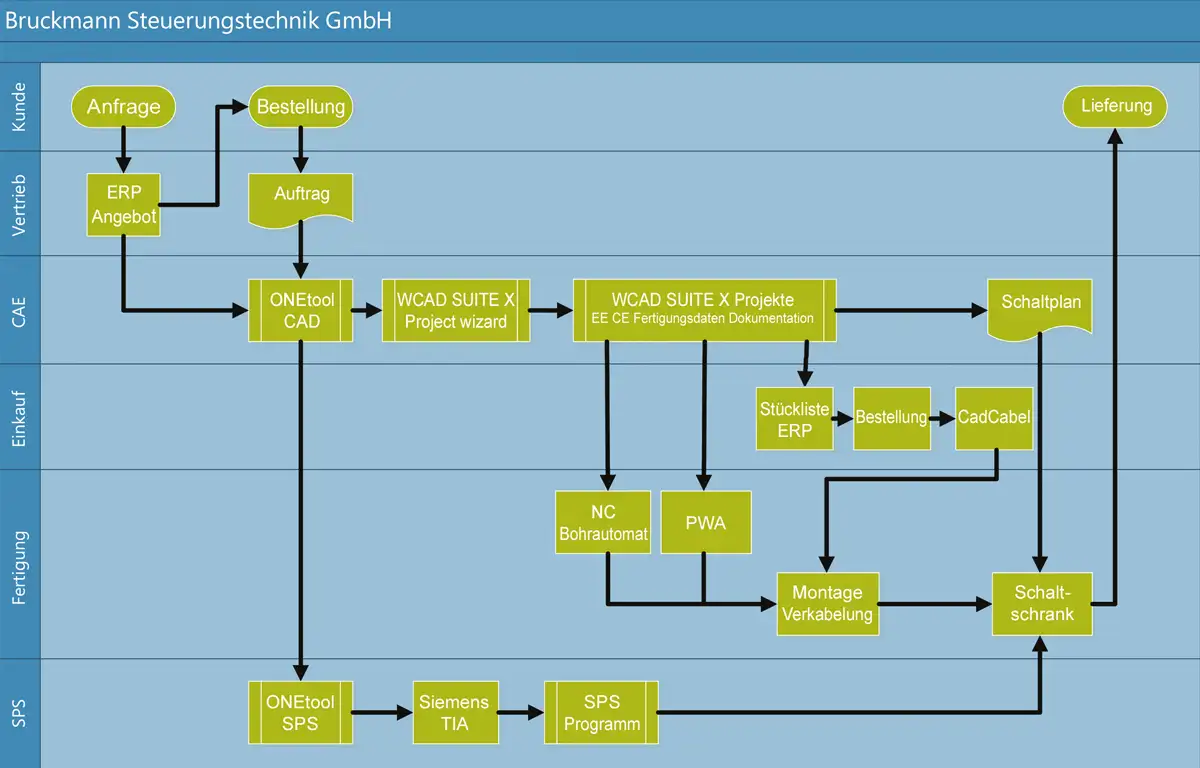
At BSG, the whole electrical engineering design process using WSCAD, including switch cabinet configuration and production control, is controlled directly from the tender.
The basic price of the electrical CAD system from another provider is much higher as we have to pay extra for every individual interface. In the case of several workstations, we are talking about a lot of money.
Automated electrical engineering design
The procedure followed when processing a typical order at BSG looks something like this: The customers – end customers and plant and machinery construction companies – submit procedure plans or CAD drawings of the machinery’s mechanical systems or plant to BSG. The first step taken involves using the ERP system to draw up a tender based on existing know-how. After the order has been awarded, all the relevant items contained in the tender for the complete electrical engineering design including a complete set of documentation in accordance with standards will be sent via ONEtool to the WSCAD software.
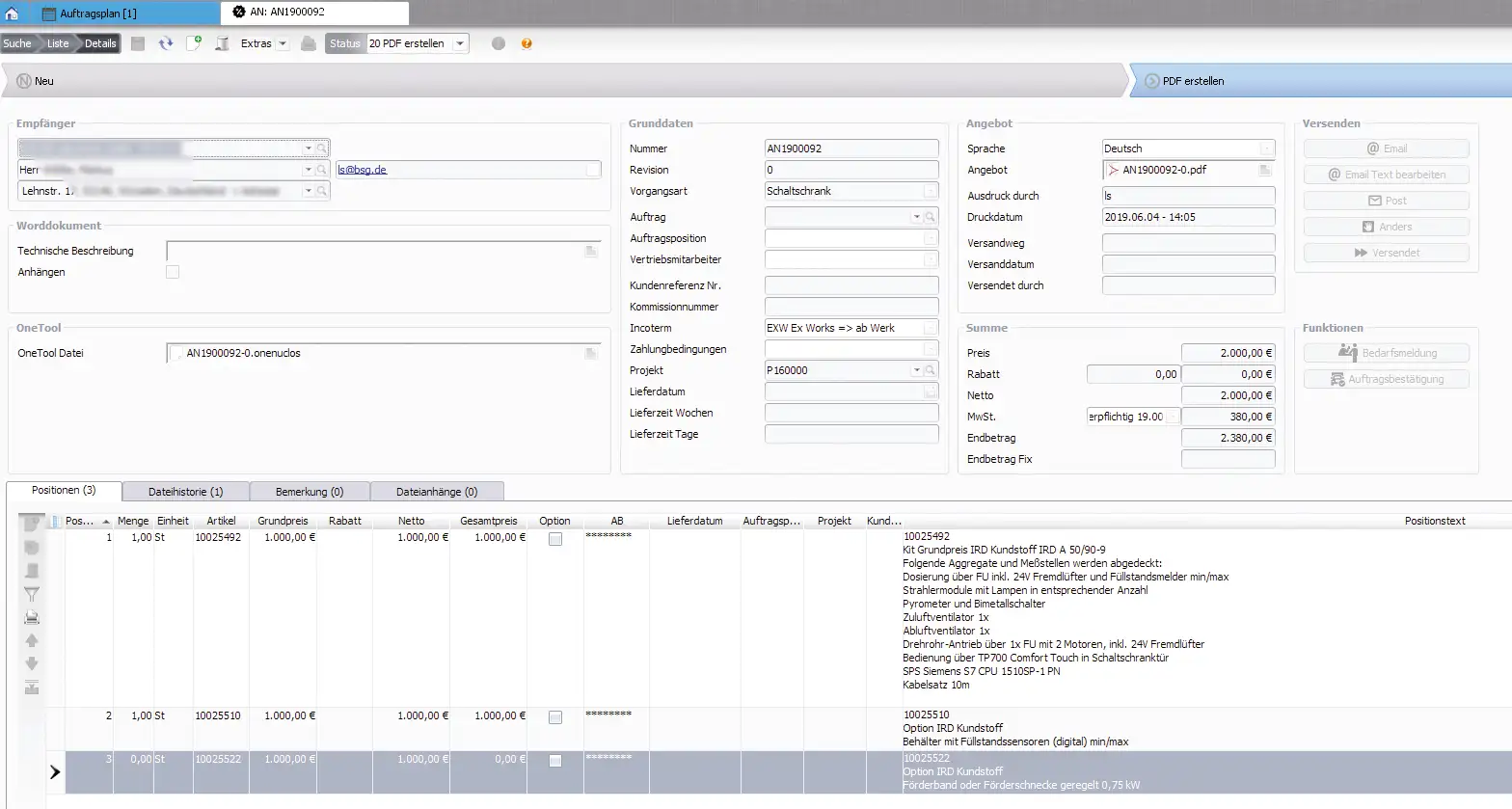
The items in the tender already contain all the information required for using the “ONEtool” configuration tool created by BSG itself and the “Project Wizard” add-on from the WSCAD software to generate circuit diagrams and cabinet layouts including a complete set of documentation in accordance with standards.
ONEtool is a configuration tool created by BSG itself which is constantly undergoing development. “In this context, being provided with a corresponding interface by the electrical CAD supplier was important for us”, says Thomas Drechsler. “At the time, we also made enquiries to the other manufacturer but they essentially wanted to sell us their own in-house solution. With WSCAD, the Project Wizard gave us precisely the interface that we needed for us to be able to dock the solution that we had developed ourselves to our ERP system.” In ONEtool, various functions can be found behind the article numbers from the ERP system while further detailed technical data are recorded during configuration and sent via the WSCAD Project Wizard to the WSCAD software. Macros and macro variants for creating circuit diagrams and cabinet layouts are stored for each function. “We started working with macros very early on”, reminisces Leendert van Straalen. “They – including variants – had just kept on growing in number over time and had become difficult to manage.
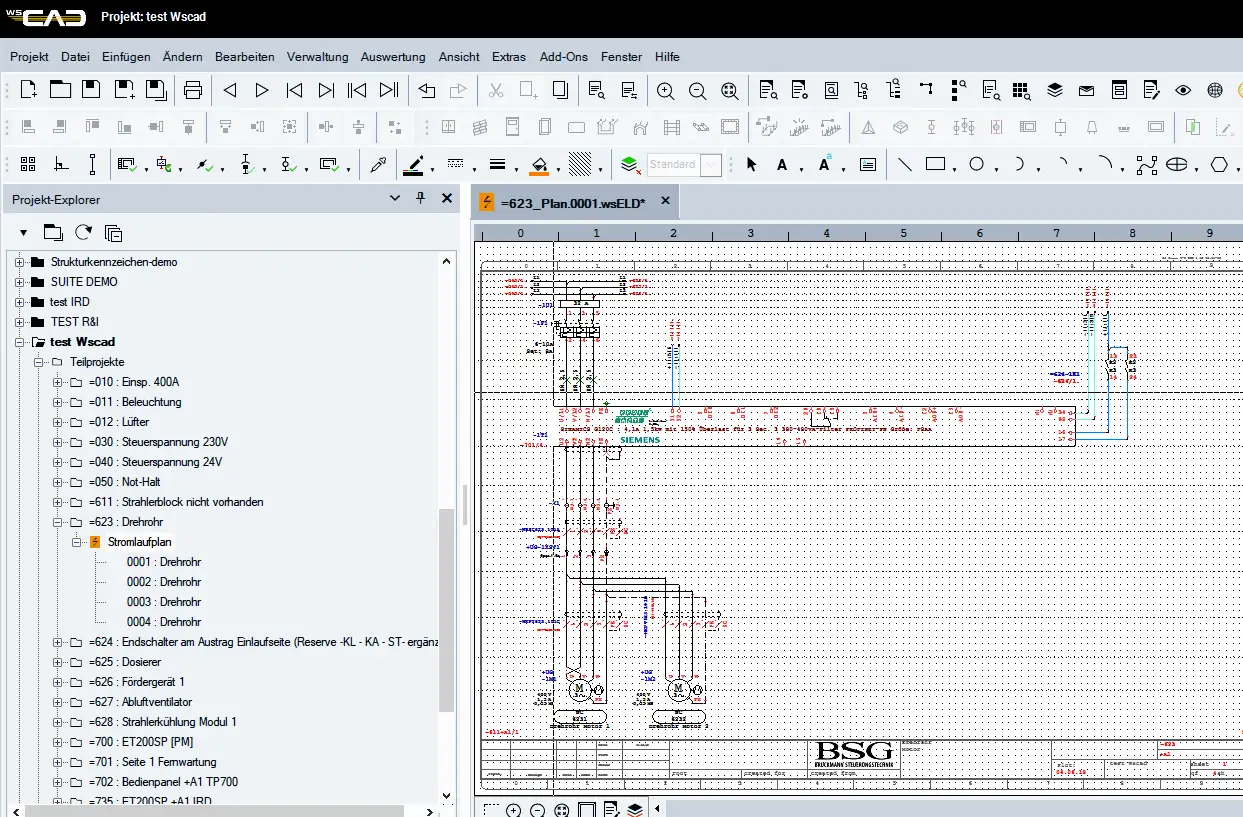
Using data from the “ONEtool” configuration tool, the “Project Wizard” produces circuit diagrams automatically with the help of the Electrical Engineering module from the WSCAD SUITE.
Today, the Project Wizard puts everything together automatically, without us having to give it much thought.” Once it has all been thought through and saved in so-called sets, the Project Wizard follows all the in-house requirements when arranging the macros and their variants. „In projects where we can be transfer the data directly from the ERP system, engineering time is reduced by 80 to 90 per cent.”, says van Straalen happily. But even in projects which differ from the norm, the time savings are still a good 20 to 30 per cent compared with conventional development. The generation of electrical engineering documentation brings a further benefit: plans and documentation are always laid out and structured in the same way – which facilitates service and maintenance enormously for customers of BSG.
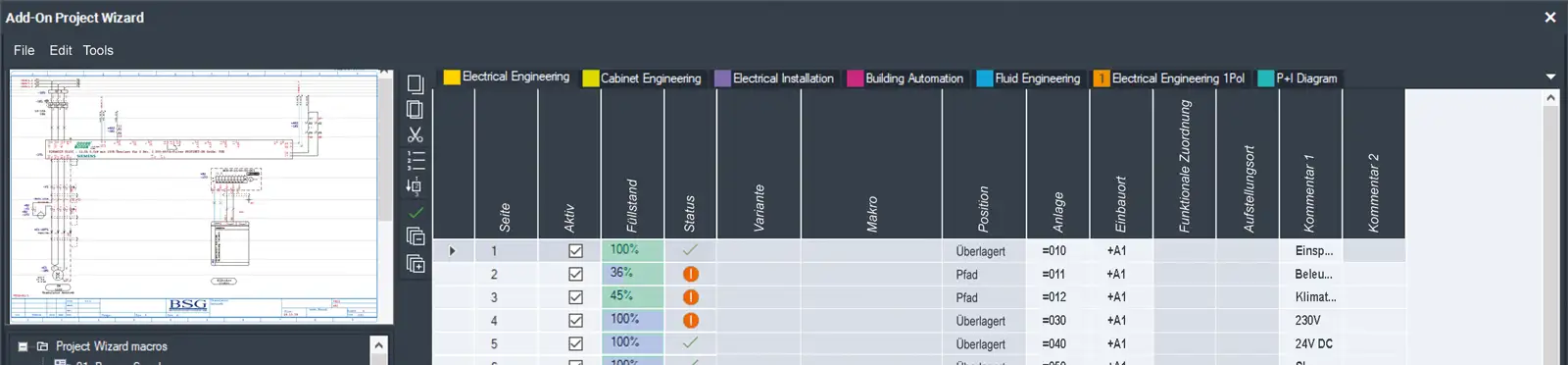
Circuit diagrams, cabinet layouts and documentation are generated automatically in WSCAD via the “Project Wizard” add-on. Time savings of up to 30 per cent are achieved in respect of the engineering for individual plants and up to 90 per cent for standard control systems.
The configuration of switch cabinets and terminal boxes is also proposed via ONEtool and the Project Wizard and just has to be synchronised manually. The parts list generated automatically in the WSCAD software goes back into the ERP system where it triggers the order process. Here, the designers from BSG use another capability of the Cabinet Engineering Expert module from the WSCAD software: The data generated is used not only to create various inscriptions and laser-cut labels but also to produce wires and cabinets in one go. “Other electrical CAD suppliers want to sell additional licences for cable routing and each controlled machine. With WSCAD, all the features were included in the Cabinet Engineering Expert module at no extra charge.”
BSG uses an NC drilling machine from Steinhauer to make cabinet doors and enclosures. Smaller wires, for the terminal boxes for example, are also produced in-house using the PWA from Steinhauer. BSG procures larger wire sets and bundles externally via service-provider CadCabel. This process is also a simple one: for each menu item in the WSCAD software, all the data generated from the application are transferred directly to CadCabel and used as a basis for production. “What we particularly like about WSCAD is the openness of the system and the logical structure. The application is simple to use and easy to learn. Once you have grasped it, you can explore and use numerous functions associatively yourself. It is significantly more costly and difficult to do this with other systems”, explains Leendert van Straalen.
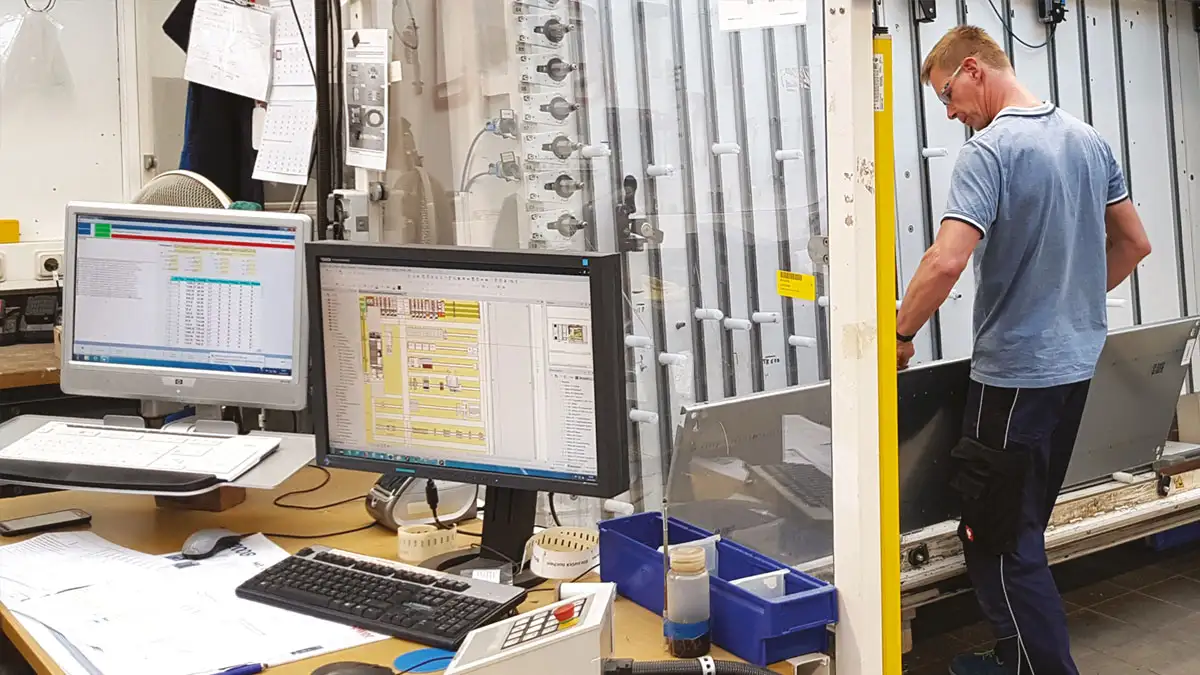
Cabinet layouts, including all the production data for labelling, wires and cabinet enclosures, are generated without any additional licence costs using the Cabinet Engineering Expert module and sent to the NC machines of renowned manufacturers.
In projects where we can transfer the data directly from the ERP system, engineering time is reduced by 80 to 90 per cent
That leaves the programming of the control systems: ONEtool was not “one” tool and this process would not be carried out directly from the configuration tool either. Based on existing know-how and due to their wide distribution, control systems from Siemens are predominantly used. The ONEtool PLC has a direct interface with the Siemens TIA portal for creating PLC programs. Because I/O cards are changed every now and then, the direct return channel to the electrical engineering design facility from the TIA portal via the TIA interface from WSCAD software is being developed and implemented. In this way, configurations changed in the TIA portal are restored in WSCAD where they are updated immediately in all documentation. Also, conversely, the PLC programmer can directly identify changes made in WSCAD in the TIA portal and continue to use them. The result: complete control systems and switchgear, consisting of switch cabinets including the control system and decentralised terminal boxes. Extensive testing is carried out prior to delivery. The WSCAD software also helps with this by providing individually created checklists and data values. For example, PLC channels are saved with signal types and values. The global customers of BSG usually carry out installation themselves. Besides a complete set of documentation in various languages, additional cable sets required can also be supplied ready for connection.
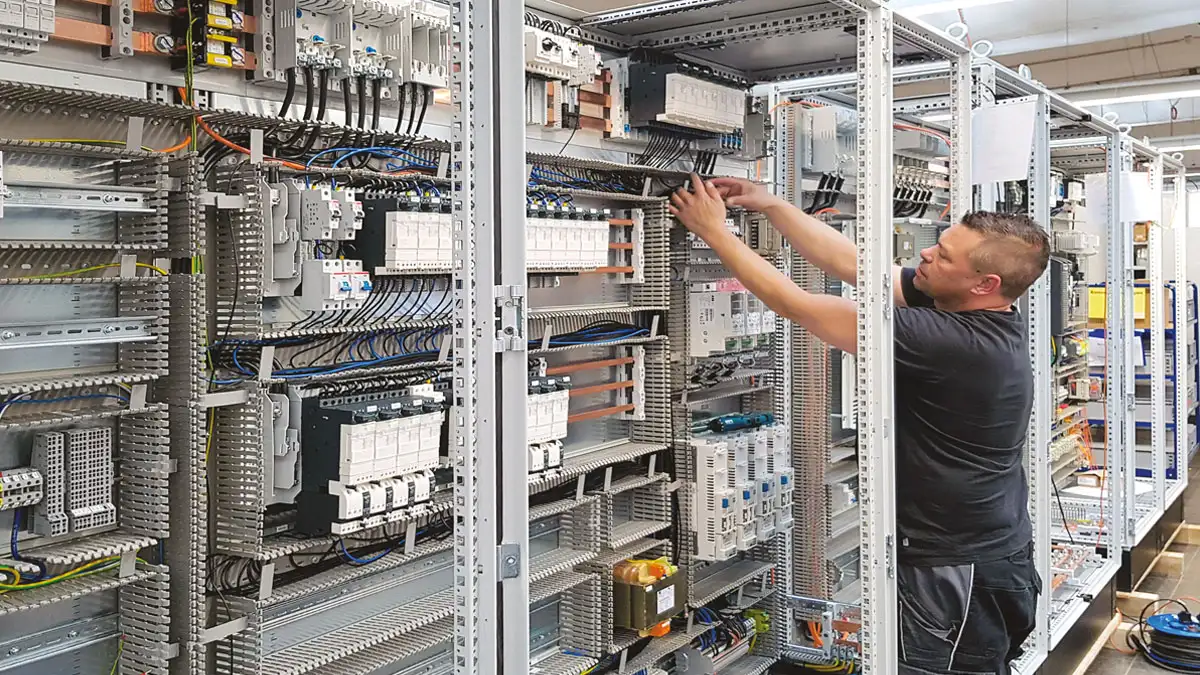
The often multiple-field switch cabinets are constructed in-house at BSG, wired, tested and shipped worldwide.
Download Case Study
This case study is intended exclusively for your personal use. Any reproduction or publication requires our express written consent.


