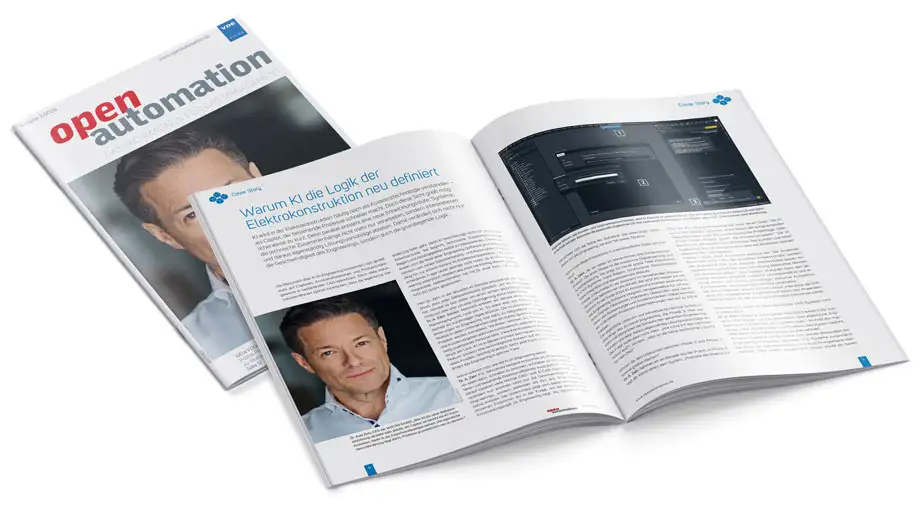
AI Translation of the Cover Story and Interview with WSCAD CEO Dr Axel Zein published in the German trade magazine ‘openautomation’ (Issue 3, June 2026)
AI is still often understood in electrical design as an assistance technology – a copilot that makes existing processes faster. However, this view may be too limited. At the same time, a new stage of development is emerging: systems that no longer merely process technical relationships and dependencies, but interpret them and independently generate solution recommendations. This is changing not only the speed of engineering, but also its fundamental logic.
The current discussion about AI in engineering is strongly focused on copilots, assistance functions and productivity gains within existing CAD workflows. However, many industrial companies are now recognising that the real transformation goes much deeper. AI is not only accelerating individual engineering tasks. It is beginning to interpret technical relationships, rules and dependencies itself. As a result, the role of engineering software is changing fundamentally – from a pure documentation and design tool to an active participant in the development process. The decisive question is therefore no longer whether AI supports engineering, but to what extent it will actively shape engineering itself in the future. openautomation spoke with Dr Axel Zein, CEO of WSCAD GmbH.

Dr Axel Zein, CEO of WSCAD GmbH: “Anyone who sees AI merely as a software implementation project, or believes that a copilot already represents AI transformation, will remain in the experimental phase. The real challenge lies in fundamentally rethinking processes.”
Dr Zein, the current AI debate often creates the impression that every software provider suddenly has “AI” in its portfolio. Is this a genuine technological transformation or more of a marketing overlay?
A. Zein: Both. Of course, we are currently experiencing strong marketing momentum around AI. However, it would be a mistake to dismiss AI as a short-term hype because of that. The structural changes in engineering are too profound. The reality in many companies reveals a clear tension: projects are becoming more complex, the number of variants is increasing, standards and customer requirements continue to grow, while qualified personnel are becoming increasingly scarce. Many design engineers are already operating at their limits. In this context, AI is not a new software feature, but a technological response to a structural problem. What is important, however, is that not every form of AI changes engineering to the same degree.
How can we recognise the depth of AI’s impact on engineering?
A. Zein: For decades, innovation in engineering primarily meant designing faster, documenting faster and executing existing processes more efficiently. This is exactly the foundation on which many of today’s CAD and electrical CAD systems are built. For the first time, AI is now changing not only the speed of engineering, but potentially the way engineering itself is created. The difference becomes apparent less in individual functions and more in the question of where the actual decision-making logic in engineering resides. From that point onwards, the role of software begins to shift: it no longer merely supports engineering – it becomes part of its structure.
Can this development be categorised into different stages?
A. Zein: Yes, we essentially see three phases of development. The first phase is classical digitalisation and automation. To this day, it characterises large parts of conventional electrical CAD systems: clear rules, structured data models, a high level of integration and reproducible processes. Phase 2 describes AI as an assistant within the existing process. This is exactly where we are today. Since the end of 2024, WSCAD has integrated AI-assisted functions into engineering software with ELECTRIX AI, for example for faster searching, translating, placing, checking or generating reports and control cabinet layouts. In individual processes, we have measured time savings of up to 99%.
However, the actual disruption and the logical next step is AI-native engineering – Phase 3. Here, the software understands and interprets the entire engineering context and independently generates solution recommendations from it. The question is then no longer: “How do I perform the next step?” but rather: “What is the best technical solution for achieving my objective?”
Can you make the difference between Phase 2 and Phase 3 more tangible?
A. Zein: Let us take a practical example. In Phase 2, the design engineer tells the system: “Place the macros for the CPU and I/O modules on a new schematic page.” The AI automatically locates and places the corresponding sub-circuits while taking the project logic into account. Or: “Check this project against the customer requirements.” The AI searches the customer’s specific guidelines and provides relevant results. This is highly productive, but the user still defines the solution path.
Phase 3 marks an architectural shift: the user no longer describes the individual tasks, but the actual objective, for example: “Modernise this plant section to improve energy efficiency while complying with specific standards and customer requirements.” The system then analyses the entire context, evaluates possible solution approaches and generates technical solution recommendations from them, including architecture, components, control cabinet layout and documentation.
The decisive difference is this: today, the software supports the user-defined engineering process. In the future, it will begin to structure the solution space itself.
Does this represent a fundamental shift in the role of traditional CAD systems?
A. Zein: That can certainly be expected. Historically, CAD systems have been tools for documentation. The actual engineering took place outside the system – in the engineer’s mind. A new situation is now emerging: the system is beginning to take over parts of this decision-making logic. AI-native systems are therefore becoming an active part of the engineering process, while CAD systems are increasingly assuming the role of the documentation and implementation layer. Or, to put it another way: until now, a product that had already been developed was designed and documented in CAD. In the future, the engineer will focus more on describing the desired objective and the requirements and constraints. The AI-native system will derive technical solutions from this and generate the corresponding CAD implementation.
Where do genuine competitive advantages arise in this environment?
A. Zein: Most companies currently use AI primarily to accelerate existing processes. The truly successful companies, however, change the process itself. This is exactly where sustainable competitive advantages arise. Anyone who merely makes engineering more efficient improves existing workflows. However, anyone who begins to rethink decision-making processes, roles and responsibilities and engineering structures transforms the value creation process itself.
What are companies currently doing wrong most often when it comes to AI?
A. Zein: AI is often treated as an IT topic. That is the central mistake. AI is not an additional tool that can simply be introduced. Rather, it represents a change in decision-making processes, responsibilities and ways of working within engineering. Anyone who sees AI merely as a software implementation project, or believes that a copilot already represents AI transformation, will remain in the experimental phase. The real challenge lies in fundamentally rethinking processes.
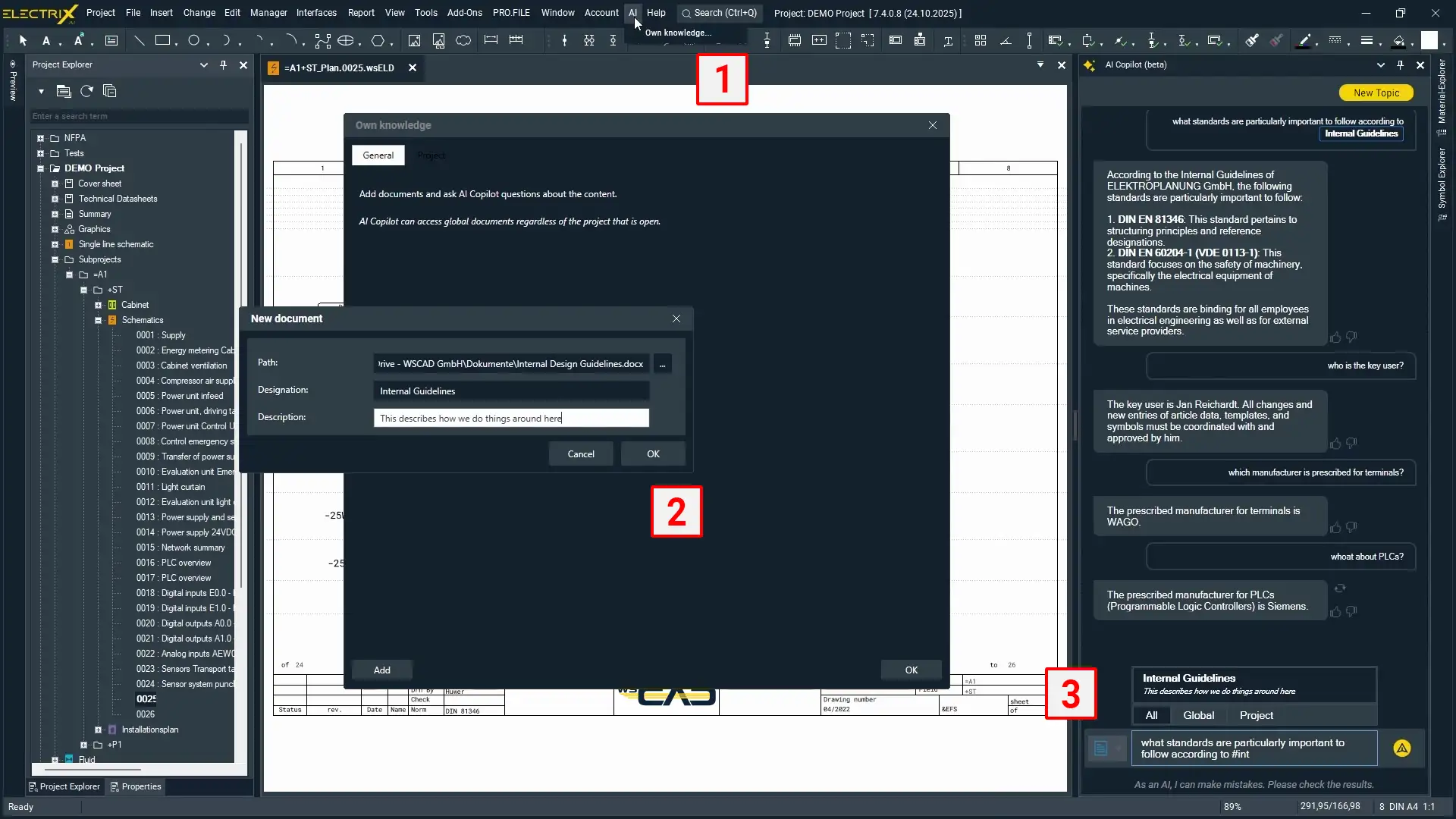
Company-specific knowledge, such as customer and corporate guidelines, is stored in ELECTRIX AI (1). AI Copilot searches this knowledge base (2) and delivers the relevant results within seconds (3). The time-consuming search through paper-based or PDF documents becomes unnecessary.
What role do management and corporate culture play in this?
A. Zein: A decisive one. If AI is not strategically anchored at management level, it will remain a pilot project. At the same time, employees must understand that they are not being replaced, but that their role is changing and being enhanced. The most successful companies are not necessarily those with the largest technology departments, but those that learn and adapt the fastest.
How is the role of the design engineer changing as a result?
A. Zein: The role is shifting significantly, but it remains central. The proportion of repetitive detailed work, such as designing, searching or repeating tasks, is decreasing. In contrast, decision-making, evaluation, structuring and taking responsibility are becoming increasingly important. A strong understanding of systems and the ability to assess and evaluate technical solutions will become critical competencies. The design engineer of the future will no longer primarily be the fastest CAD user, but the person who understands technical relationships and dependencies precisely, thinks in a structured way and is able to formulate clear objectives, requirements and constraints from them. To put it succinctly: the design engineer of the future will spend less time designing and more time making decisions.
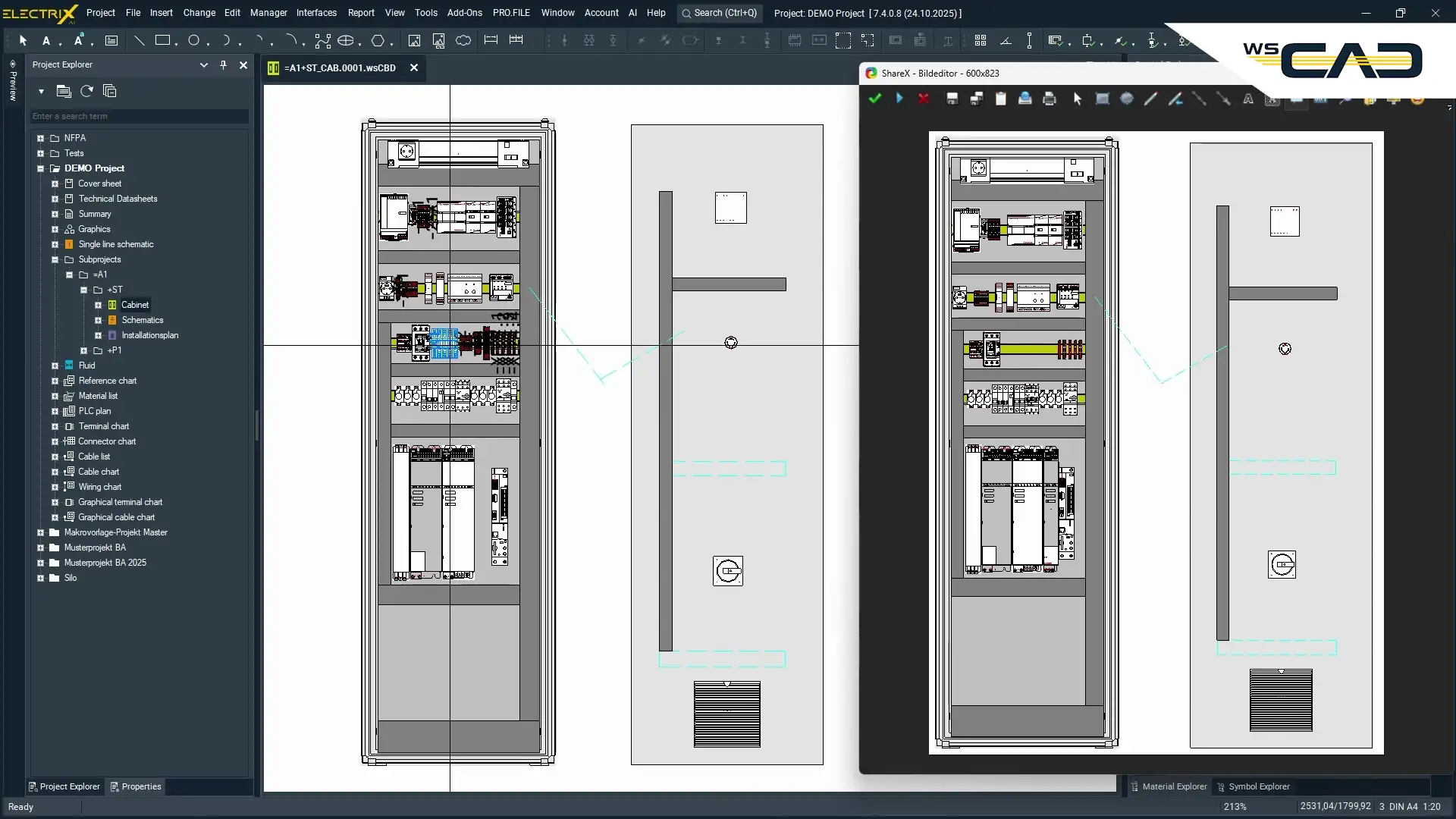
Competitive advantage: In ELECTRIX AI 2026, AI takes over repetitive, monotonous routine tasks from the design engineer. It identifies similarities and proposes possible control cabinet layouts. The design engineer reviews and finalises the layout.
Do you share the concern of many critics that AI will displace jobs?
A. Zein: No, but it will change the nature of work. Technological transformations have always changed professions. With the advent of railways and automobiles, coachman occupations disappeared, while entirely new industries and markets emerged. AI follows the same pattern. It will automate certain tasks and thereby change, replace or eliminate them. At the same time, new fields of activity will emerge, the full scope of which cannot yet be completely foreseen today. AI does not replace engineers. However, it changes how engineers work and which profiles will be in demand in the future. Activities based purely on execution and routine will come under pressure. Engineering will become more conceptual, more interdisciplinary and more decision-oriented.
Looking ahead five years, what will electrical design look like?
A. Zein: It will be significantly more model-based, context-driven and integrated. AI will no longer be an add-on, but an integral part of the engineering system itself. The systems will understand context, take rules into account, incorporate experiential knowledge and propose solutions. The design engineer will remain ultimately responsible. However, the way in which solutions are developed will change fundamentally. And this transformation has already begun. The decisive question is no longer whether AI will become part of engineering. The question is which companies will recognise early enough that the very logic of engineering itself is changing.
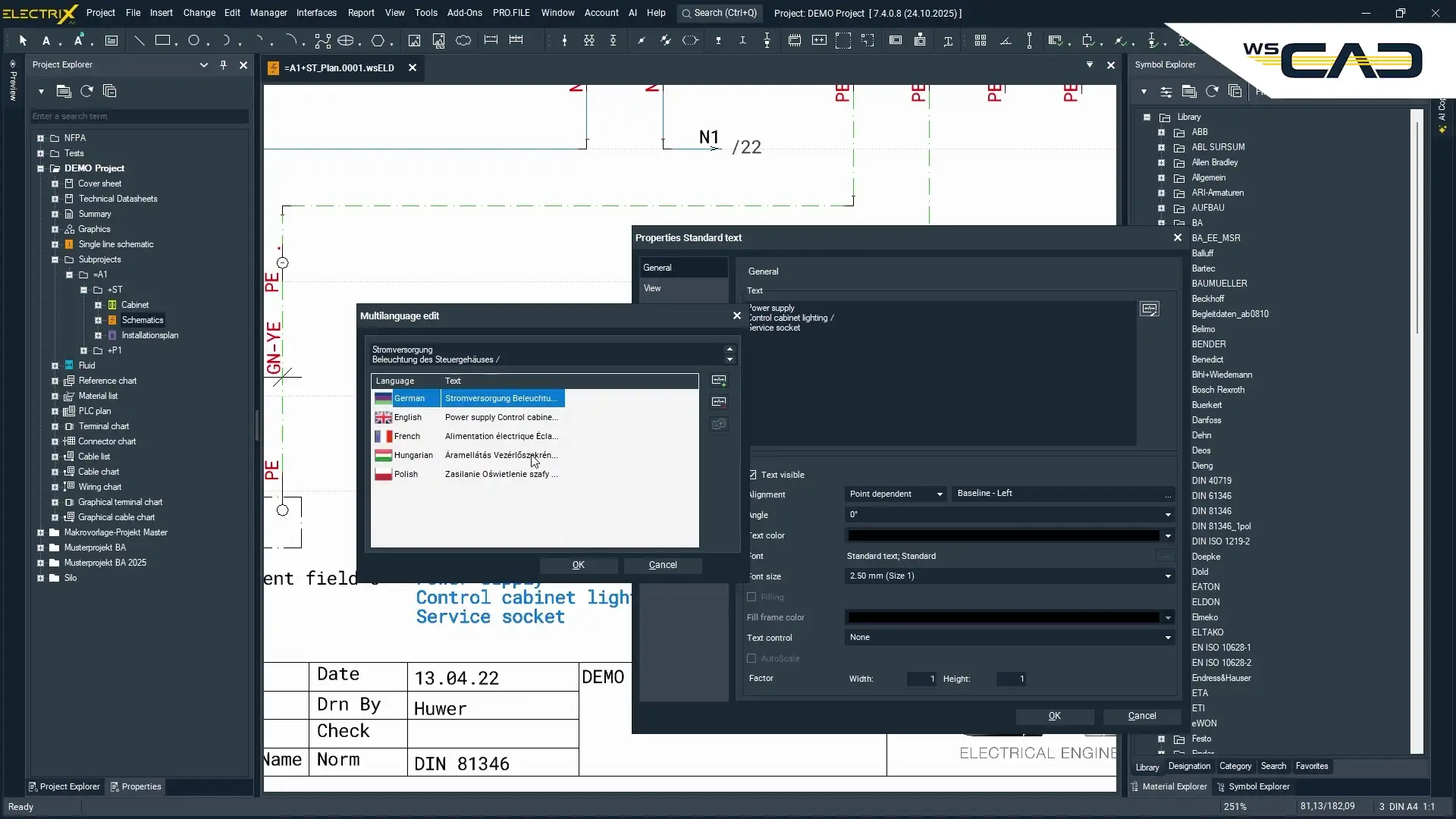
For the translation of individual texts through to complete documentation into virtually any language, AI delivers technically accurate translations and wording within a very short time. What previously required translation agencies and took hours or even days can now be completed in just a few minutes.
This article is intended for your personal use only. Reproduction or publication requires the express written consent of the publisher.