
NUR FÜR DESKTOP !!!!
Insights from 1,267 electrical engineers, engineering managers and engineering leaders across 40 countries
Discover where engineering teams are losing productivity, how AI is changing engineering workflows, and what high-performing organisations are doing differently.
What you will learn:
- Why engineering teams are reaching their capacity limits
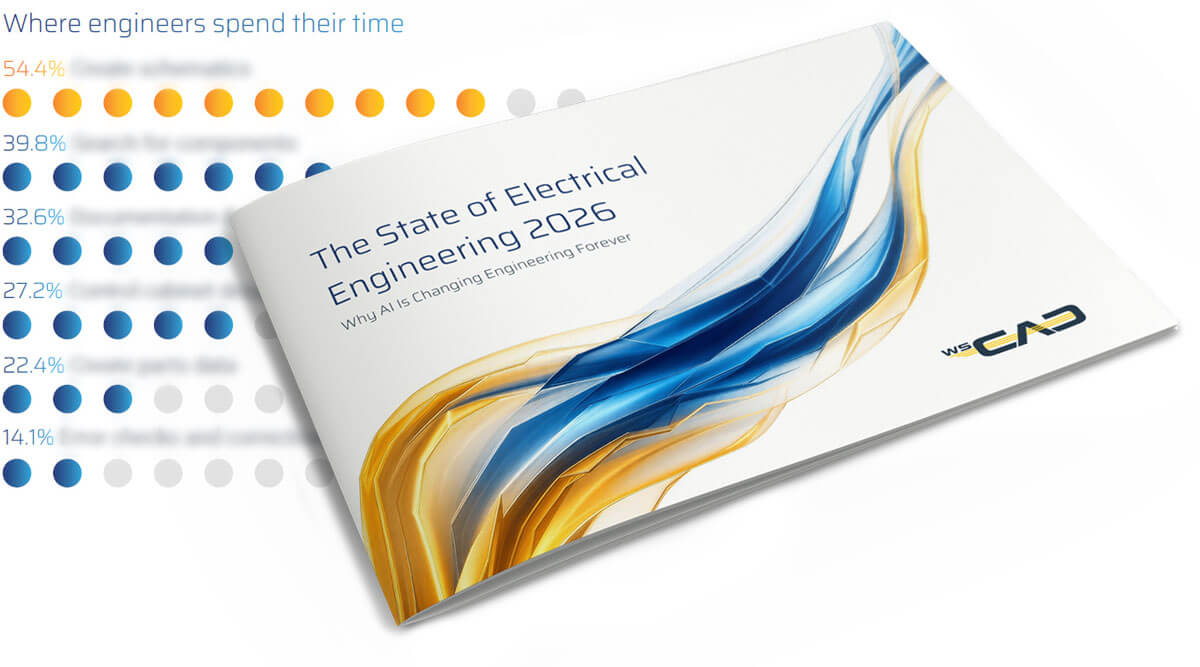
- Where engineers spend their time and where productivity is lost
- The hidden bottlenecks limiting scalability and innovation
- Why traditional automation is no longer enough
- How AI is changing engineering workflows today
- What AI-Native Engineering could mean for the future of the industry
- Strategic implications for engineering leaders and executives
For five decades, two major transitions shaped engineering productivity: the shift from paper drawings to digital CAD, then transition from CAD to integrated engineering platforms. A third wave is now underway. Based on feedback from 1,267 electrical CAD users across 40 countries, this study examines the current state of the industry and the developments shaping its future. It also includes perspectives from former executives of Rockwell Automation and Daimler.
The findings reveal a major shift now emerging: AI-native engineering. Software is beginning to understand complete project contexts and autonomously propose optimised solutions, bringing a long-standing vision closer to everyday engineering reality.
Key Findings:
- 54% of engineers have no time for innovation
- 40% spend significant time searching for components
- 36% report a lack of standardised processes
Download the report to see the complete results and the answers to these questions:
- Are electrical engineers already working at their capacity limits?
- What tasks consume most of an engineer’s working time?
- Where can artificial intelligence provide meaningful support and where are its limits?
- How will AI change the role of the electrical engineer in the years ahead?
Download the premium industry report
NUR FÜR MOBILE !!!!
Insights from 1,267 electrical engineers, managers and leaders across 40 countries
Discover where engineering teams are losing productivity, how AI is changing engineering workflows, and what high-performing organisations are doing differently.
What you will learn:
- Why engineering teams are reaching their capacity limits
- Where engineers spend their time and where productivity is lost
- The hidden bottlenecks limiting scalability and innovation
- Why traditional automation is no longer enough
- How AI is changing engineering workflows today
- What AI-Native Engineering could mean for the future of the industry
- Strategic implications for engineering leaders and executives
For five decades, two major transitions shaped engineering productivity: the shift from paper drawings to digital CAD, then transition from CAD to integrated engineering platforms. A third wave is now underway. Based on feedback from 1,267 electrical CAD users across 40 countries, this study examines the current state of the industry and the developments shaping its future. It also includes perspectives from former executives of Rockwell Automation and Daimler.
The findings reveal a major shift now emerging: AI-native engineering. Software is beginning to understand complete project contexts and autonomously propose optimised solutions, bringing a long-standing vision closer to everyday engineering reality.
Key Findings:
- 54% of engineers have no time for innovation
- 40% spend significant time searching for components
- 36% report a lack of standardised processes
Download the report to see the complete results and the answers to these questions:
- Are electrical engineers already working at their capacity limits?
- What tasks consume most of an engineer’s working time?
- Where can artificial intelligence provide meaningful support and where are its limits?
- How will AI change the role of the electrical engineer in the years ahead?

