
Miele Werk Bürmoos Case Study
The Problem:
Miele Bürmoos needed to manage complex, highly customised projects across multiple engineering disciplines. Designing piping, electrical and pneumatic systems, control cabinets and documentation separately created a need for greater integration and consistency.
The WSCAD Solution:
Miele implemented WSCAD SUITE as a single platform for electrical engineering, fluid plans, P&ID and cabinet design. Changes made to components are automatically reflected across disciplines, while reusable macros, centralised parts data and automated documentation streamline the entire engineering process.
Mastering Complex, Interdisciplinary Projects
Highly specialised machine and equipment manufacturers often need to work on different interdisciplinary tasks concurrently: piping diagrams, electrical and fluid plans, cabinet configuration, etc. Johann Übertsberger, electrical engineer at the Miele factory in Bürmoos, offers insight into how the team proficiently handles custom projects.
At a Glance
Customer
- 290 employees at the Miele Bürmoos site
- Based in Austria, specialising in advanced manufacturing
- Develops customised equipment for medical and industrial applications
- Produces laboratory washers and washer-disinfectors for healthcare facilities
- Handles complex engineering projects from design through to documentation
- www.miele.at
Challenge
- Managing complex, customised projects across multiple disciplines
- Coordinating piping, electrical and pneumatic design efficiently
- Keeping design changes consistent across different plans
- Reducing manual work when creating documentation and project lists
- Connecting engineering and cabinet design within one workflow
Solution
- Manage electrical, fluid and cabinet engineering in WSCAD SUITE with seamless data consistency.
- Use a central parts database, macros and templates to reduce errors and speed up workflows.
- Connect cabinet design with manufacturing, automate documentation and add built-in safety checks.
Benefits
- Faster, more accurate engineering with integrated, automated workflows and centralised data.
- Easy cross-disciplinary collaboration; changes update instantly across all plans and teams.
- Streamlined manufacturing and documentation with automatic list generation and quality checks
WSCAD disciplines and add-ons used:




Custom Engineering from Design to Delivery
The 290 employees at the Miele Werk Bürmoos develop, manufacture and market technically sophisticated stainless steel and other metal assemblies and complete units for the household, medical and plant engineering, as well as industrial cleaning. Among the most customised large systems are lab washers and washer-disinfectors for hospitals. The decision as to whether standards are used in the configuration and the extent of the customised development portion is made by the project team at Miele based on cost-benefit aspects and in close consultation with the customers. The underlying standard products for each project undergo a continuous process of improvement. All the project objectives and requirements are recorded in a specifications document from which the order for the electrical engineering design is derived. This follows a fixed sequence and starts with the piping plans, followed by the electrical systems and pneumatics, the control cabinet and, finally, the acceptance and documentation.
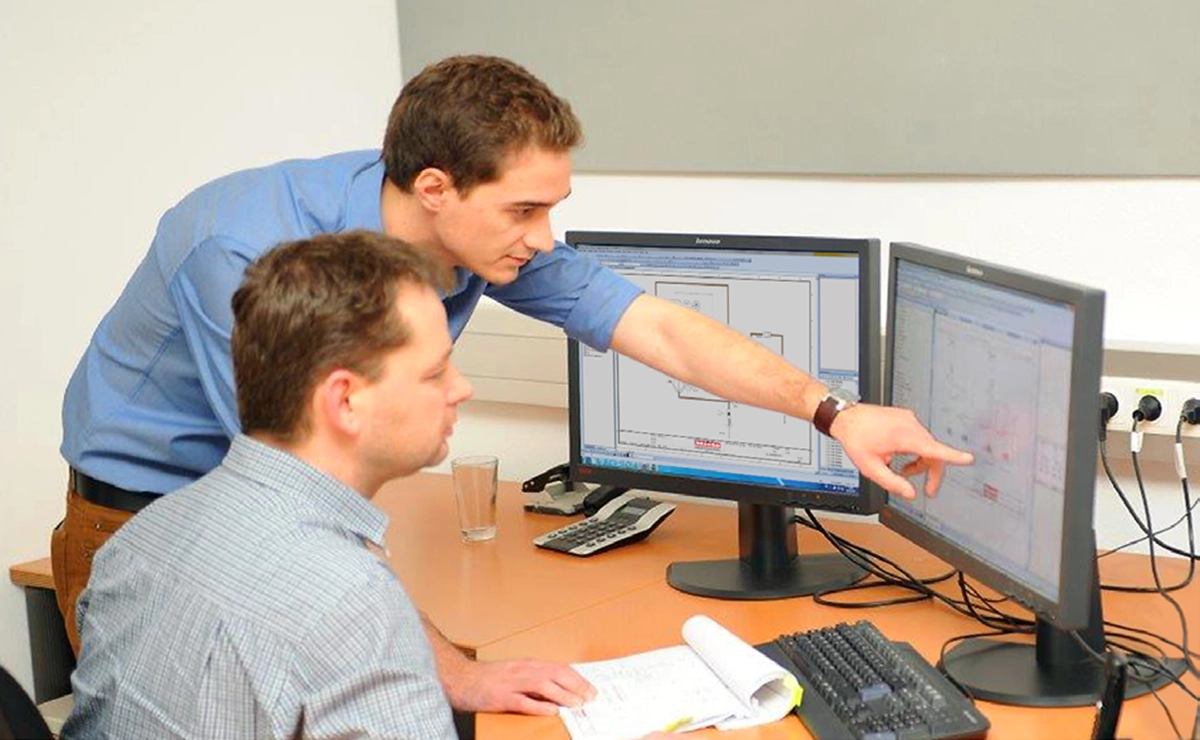
Most of the custom lab washers and large washer-disinfectors for medical practices, surgical centres, and clinics are developed at Miele Bürmoos with the electrical CAD solution from WSCAD.
Once process engineers have developed the procedure for a system, mechanical engineers can design the first draft. It already includes the piping and defines which pneumatic and magnetic valves are used. Electrical designers are creating piping diagrams using the P&ID module from WSCAD SUITE. The symbols for the sensors for pressure, temperature, or position and limit switches come from an integrated database. The free online electrical CAD data library at wscaduniverse.com contains over 1.2 million symbols and parts data from more than 170 manufacturers in the WSCAD and Eplan* format. It has proven to be of great help in this process.
“Whenever we place a new part into one of our projects, we get the current symbols and parts data from wscaduniverse.com and store it in our local, project-specific database”, says Johann Übertsberger, electrical engineer at Miele. “Since we also create the schematics, pneumatics and cabinet layouts with the WSCAD SUITE, all placed symbols such as sensors and valves can be immediately found in all the schematics of the other engineering disciplines as well. Design once and you are done.”
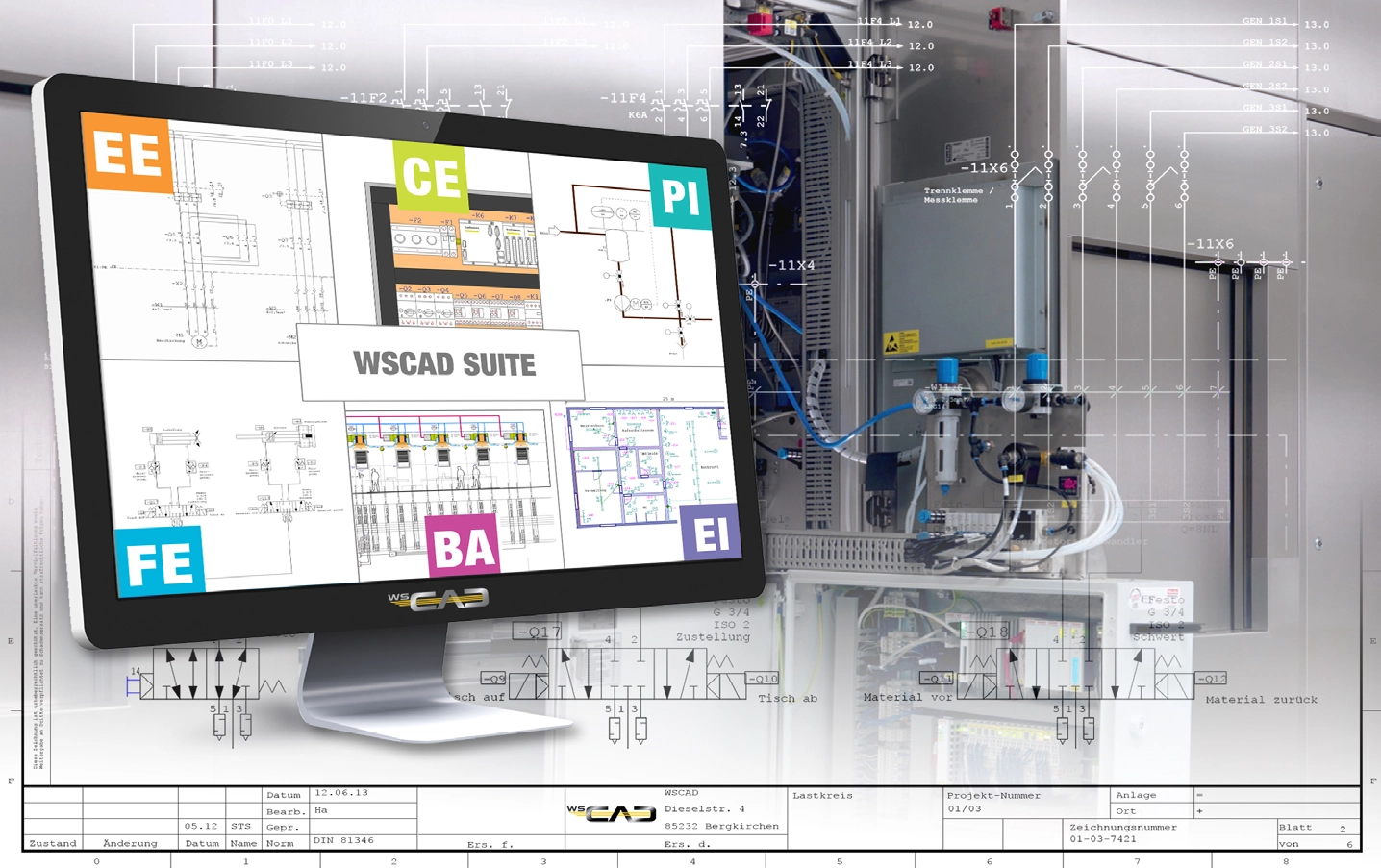
From piping diagrams, fluid and electrical schematics, down to the control cabinet layouts, the engineers at Miele Bürmoos design with the WSCAD SUITE.
Whenever we place a new part into one of our projects, we get the current symbols and parts data from wscaduniverse.com and store it in our local, project-specific database
Professional cabinet engineering with integrated manufacturing
The cabinets were previously designed and manufactured externally, but this step is increasingly being handled internally by using the WSCAD SUITE Cabinet Engineering module. It reuses previously created schematics. One could even start a cabinet layout with schematics from other electrical CAD systems. This is particularly interesting for control panel builders who manufacture to order. The cabinet size is estimated, and the designer specifies how mounting rails, feeds and other components are to be arranged. This process can be accelerated by using macros and macro variants. Components snap accurately to a tenth of a millimetre and are automatically aligned to the left and right. Does the cabinet door close properly? The 3D control view quickly provides clarity.
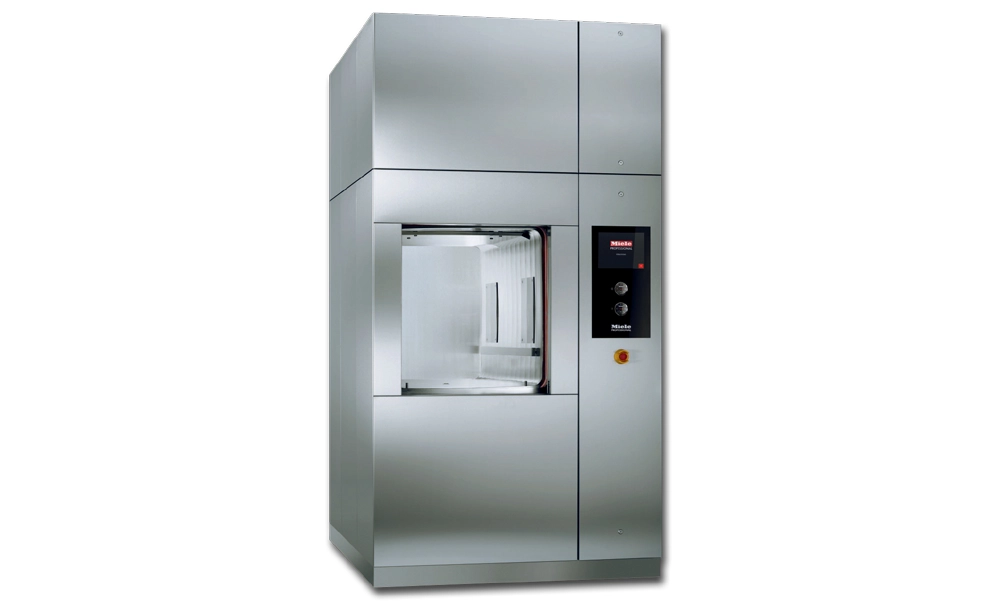
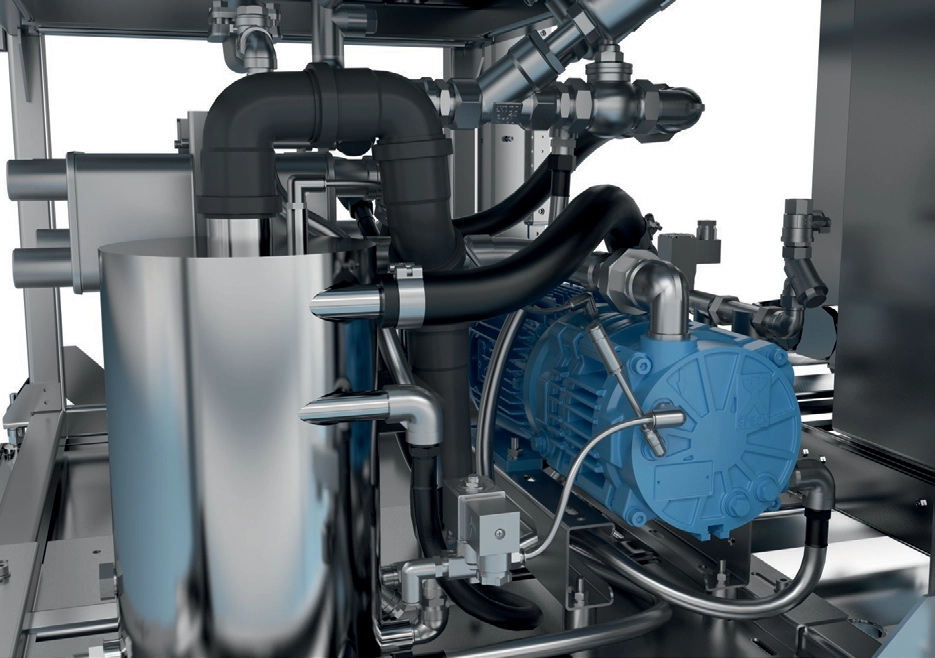
The large washer-disinfectors from Miele Professional with safety light curtains, double-pressure chambers and low-noise vacuum pumps are usually customised designs.
Streamlined Design and Automated Documentation
When the piping diagram is ready, the schematics and fluid plans follow. In a preliminary step, the designers clarify safety issues, assess any possible dangers emanating from the equipment in a risk analysis, and document the results. An important point, since the devices are preferentially used in the medical environment. In principle, the pneumatic plan follows the schematic, but occasionally there are overlaps. In the plants, multiple valve islands fitted with solenoid valves are primarily used. They control the media in the pipeline pneumatically. Most of the components and conductors have already been entered in the piping diagram. Any subsequent change, whether manually or via a macro replacement, is automatically and fully replicated in all other disciplines. Function texts come from the database and no longer need to be written manually. Components within a control cabinet are represented in designated areas. The use of macros and macro variants speeds up the design work. At the touch of a button, the WSCAD software generates all the required lists for the entire project documentation from the drawn plans. Individual lists, such as checklists, measurement protocols or PLC assignment lists, are also possible.
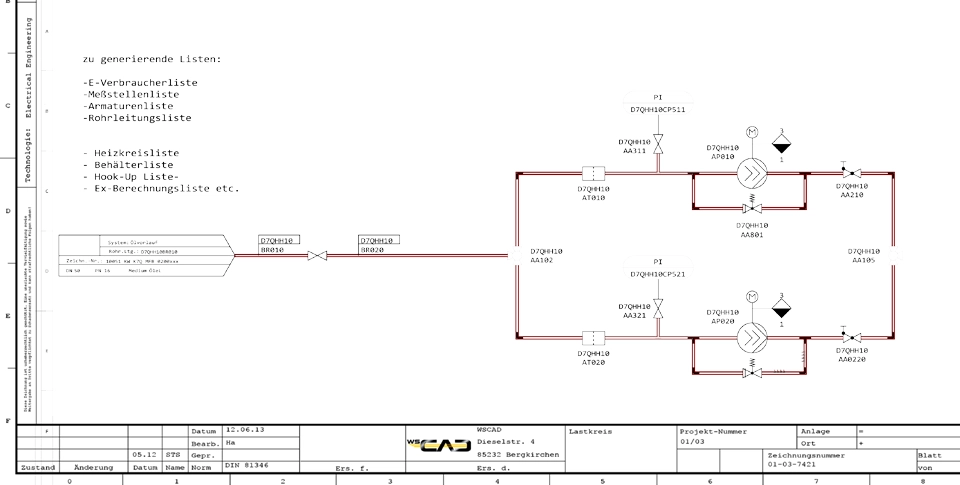
The piping diagram for large-scale washer-disinfectors from Miele Professional with safety light curtains, double-walled pressure chambers and low-noise vacuum pumps is developed with the P&ID module of the WSCAD SUITE.
From Automated Routing to Quality Control
Besides the parts data, all three-dimensional measurements down to the connection terminals of the components are stored. This is an important prerequisite for the next step: simply click on “Routing”, and the software makes all the connections and calculates the wire lengths. Even the current filling degree of the cable channels is displayed.
The generated data can be used for manufacturing: label printing or the manufacture of wires, wire sets, cabinet doors and mounting plates on NC machines from renowned manufacturers are directly possible without detours and additional costs.
All the interfaces required for this are part of the WSCAD SUITE. The specialists at Miele pay special attention to the subsequent electrical and technical quality control: visual checks, measurements based on previously created protocols, one last final inspection, and test results created individually for the system complete this work step. “What we particularly like about the WSCAD software is its ease of use,” reports Johann Übertsberger. “Anyone who has ever drawn schematics with a system can quickly come to terms with this software and can develop and design across disciplines.”
Even the support is exceptional. “Whenever we have a question, we always receive constructive answers quickly and can immediately continue working.” The automatically generated documentation is typically in the form of intelligent PDF files.
This means that installers and service technicians on site do not need any special viewers and can instantly switch by clicking on a cross-reference in the cabinet layout to the schematic, for example, or to other plans.

Before leaving the house, the large washer-disinfectors manufactured at the Miele Bürmoos factory undergo rigorous testing and acceptance procedures within the context of commissioning.
We design electrical and pneumatic schematics as well as cabinet layouts with the WSCAD SUITE. When we place a symbol such as a sensor or a valve, it is immediately visible in the schematics of the other engineering disciplines.
Design once and you‘re done.
An electrical CAD platform for all non-mechanical engineering tasks
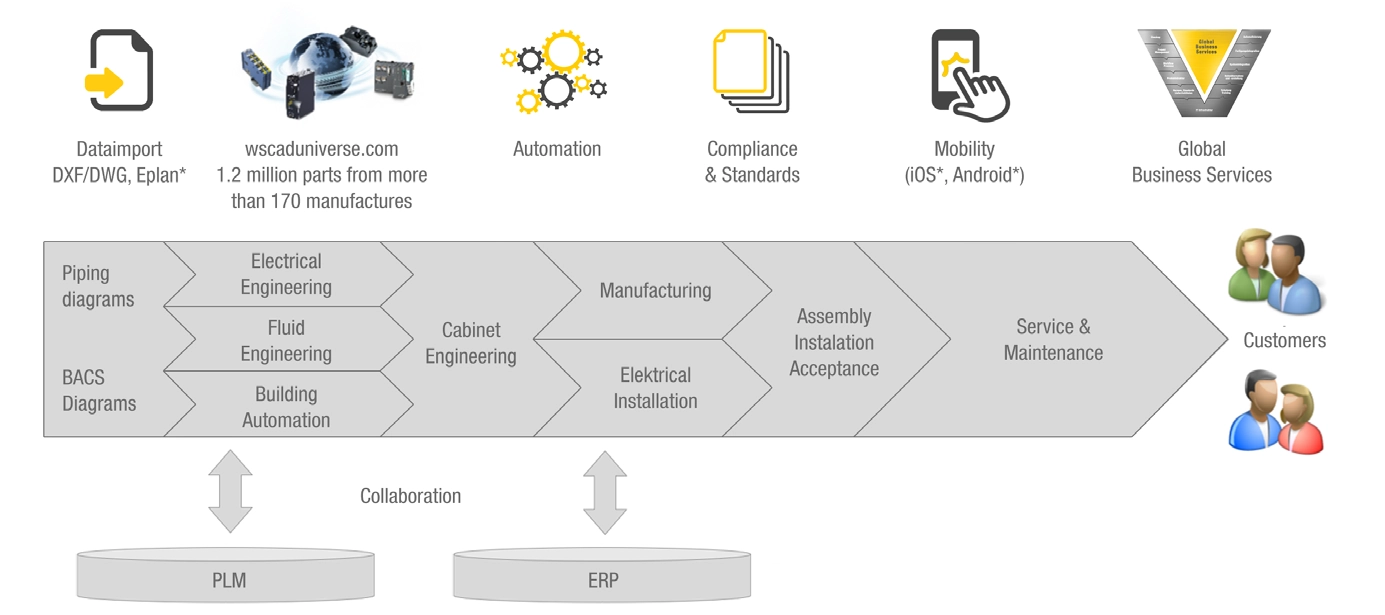
With the electrical engineering solution from WSCAD, engineers and designers can efficiently complete all their „non-mechanical“ design tasks with just one software product and on a single platform. From electrical engineering and cabinet engineering, through process and fluid technology, all the way down to building automation and electrical installation. The replacement of a valve in the fluid plan, for example, is immediately visible in all schematics of the other engineering disciplines. This saves time and improves the quality of the results.
Connected Data for Seamless Collaboration
All symbols and parts data are located in a central database which, in turn, enables cross-disciplinary work without data breaches, misunderstandings and inconveniences. It works in small or large projects, with multilingual capabilities and sophisticated user rights or even in teams with international projects. Working with parent structure identifiers, importing data from other electrical CAD systems, reliable PLM/ERP integration and proven methods to automate engineering tasks are likewise part of the WSCAD solution. It comes with various options for the maintenance contract and excellent support.
Anyone who has ever drawn schematics can quickly come to terms with this software, as can engineers across disciplines. Even the support is exceptional. „Whenever we have a question, we always receive constructive answers quickly, and we can
immediately continue working.
Download Case Study
This case study is intended exclusively for your personal use. Any reproduction or publication requires our express written consent.

