
The HTT Energy GmbH Case Study
The Problem:
HTT ENERGY’s manual data transfer between Engineering and Purchasing, inconsistent parts data, and disconnected ERP and electrical CAD systems created delays, duplicated work, and inefficient collaboration.
The WSCAD Solution:
By integrating WSCAD Electrical CAD with its ERP system, HTT established a single, synchronised parts database and automated data exchange, enabling seamless collaboration, faster processes, and more accurate project documentation.
The objective of HTT ENERGY GmbH, a medium-sized manufacturer of individual process heating and cooling systems, was to improve customer satisfaction by speeding up process cycles. A key step towards reducing planning times and speeding up the project cycle was the integration of the electrical engineering environment in the ERP system. Since then, Technology and Purchasing have worked together in close collaboration, without any loss of momentum.
At a Glance
Customer
- HTT ENERGY GmbH, Herford
- Manufacturer of energy-efficient process heating and cooling systems
- www.htt.de
Challenge
- Time-consuming need for coordination between Purchas-ing and Development
- Varying parts data
Solution
- Linking the ERP system to the electrical CAD software
Benefits
- Maintenance requirement for the consolidated parts master data minimised
- Data recorded once and used consistently
- Common component lists
- Efficient collaboration between Purchasing and Development
- Optimised reliable processes
- Less capital tied up due to re-duced inventories
WSCAD disciplines and add-ons used:

The design engineers from HTT ENERGY know what is important when it comes to the rising expectations of users and increasingly individualised solutions: their modern heaters, temperature control units, steam generators, heat exchangers and energy recovery systems require precise hardware configuration and electrical planning. They also need fast flexible tools which are linked together and guarantee consistent data flows.
Digitised processes, along with the exchange of process and product data between different IT systems, save an enormous amount of time and minimise the risk of error sources. In order to make optimum use of the electrical processes’ full potential, HTT linked its WSCAD electrical CAD system to its ERP system from Karlsruhe company abas software AG. Data are exchanged directly via the PLM/ERPsync bidirectional interface from the WSCAD solution.

The source now used for part data is wscaduniverse.com with more than 1.4 million current symbols and parts data from more than 380 manufacturers.
WSCAD-abas integration has made collaboration with our colleagues in Purchasing so much more efficient and relaxed.
Transparency at all levels
Material procurement is based on current project parts lists. The prerequisite for seamless collaboration between Development and Purchasing is a common consolidated part master. Prior to system coupling, the developers from HTT exported the company’s material lists to an Excel file which was recorded again manually by Purchasing. This time-consuming process is expected to be completely removed in the future. Another point on the modernisation agenda at HTT is the handling of complex processes. Thus one of the challenges was that some system modules had to be designed by both Mechanical Engineering and Electrical Engineering. For example, drives traditionally fall within the competence of Mechanical Engineering. However in order for Production to be able to see which drive was controlled in which control cabinet, the drives also had to be included on the circuit diagram. Therefore as a result, the drives appear on the component lists of both disciplines. In order to make sure that Purchasing does not handle orders for such system components twice, components must be given corresponding identifiers which they always carry. When Electrical Engineering delivers its component list to Purchasing, the system deletes those items automatically from the component list before it is passed on to Planning. That way, multiple orders are avoided. The WSCAD component list remains unaffected by this deletion process.
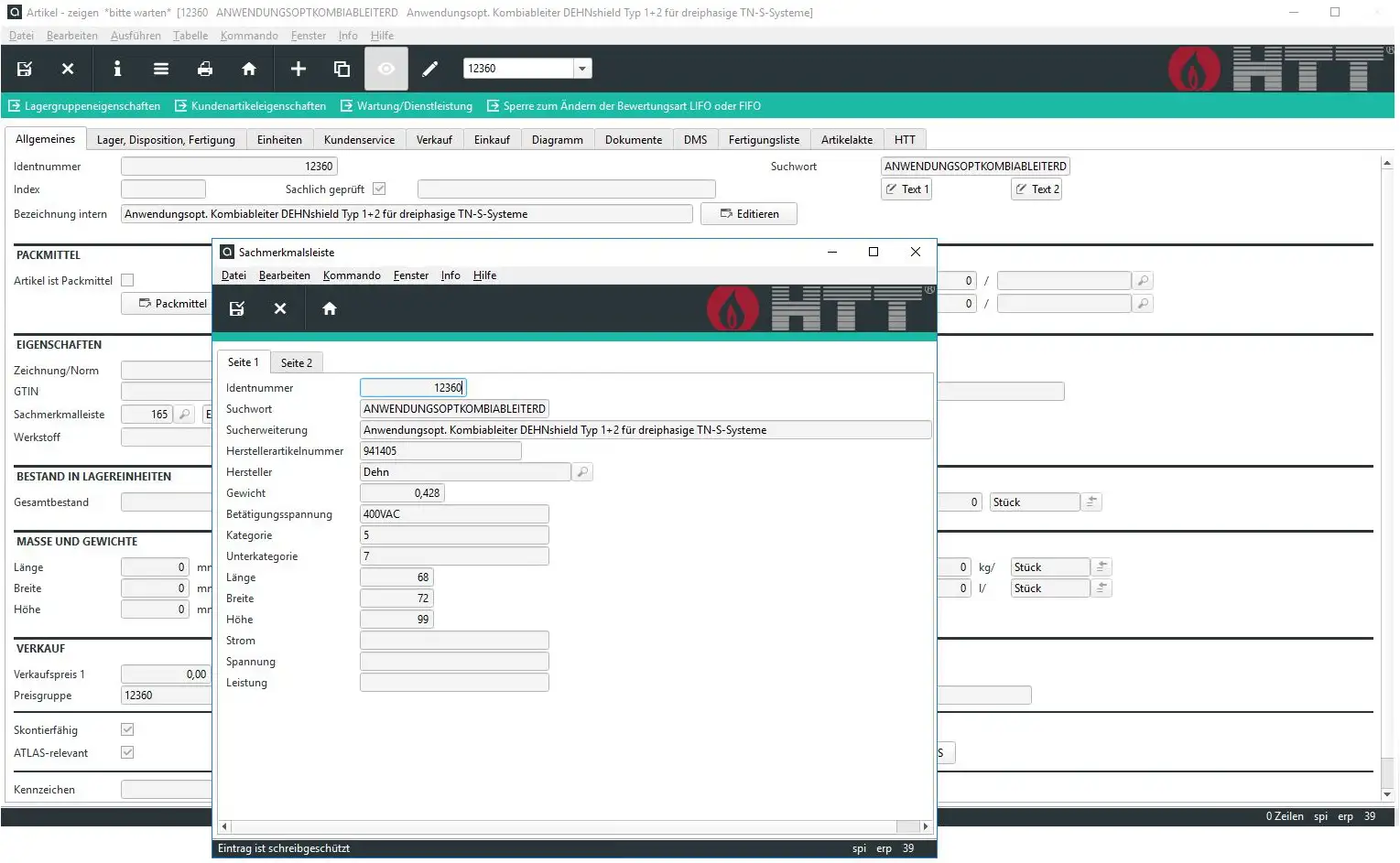
Associated product specifications and technical attributes in the characteristics list facilitate and speed up part selection.
Maintenance requirement for part master data reduced to a minimum
The first step involved purging the existing WSCAD database in the performance specification of around 62,000 unused records. That included creating the part database based on the WSCAD software which permits the selected reading of component catalogues. In one fell swoop, the team streamlined its database to 1500 components from around 170 manufacturers. The HTT team were happy to bear the one-off costs involved in creat-ing the part database as the quality of the data is outstanding, the main-tenance requirement has halved and searches provide results much quicker. The source now used for article data is wscaduniverse.com as the 1.4 million records within it, maintained by around 380 million manufacturers, already cover 90 per cent of the information required by HTT’s design engineers. So this saves on valuable development resources when creating new parts. Only a few individual attributes – such as the class for finding parts quicker – still need to be added before the project engineer triggers synchronisation with ERP. Here, the new records are completed by adding commercial information. That includes the part version and status, important information when selecting components in WSCAD. This ensures that all parties concerned always use the latest components.
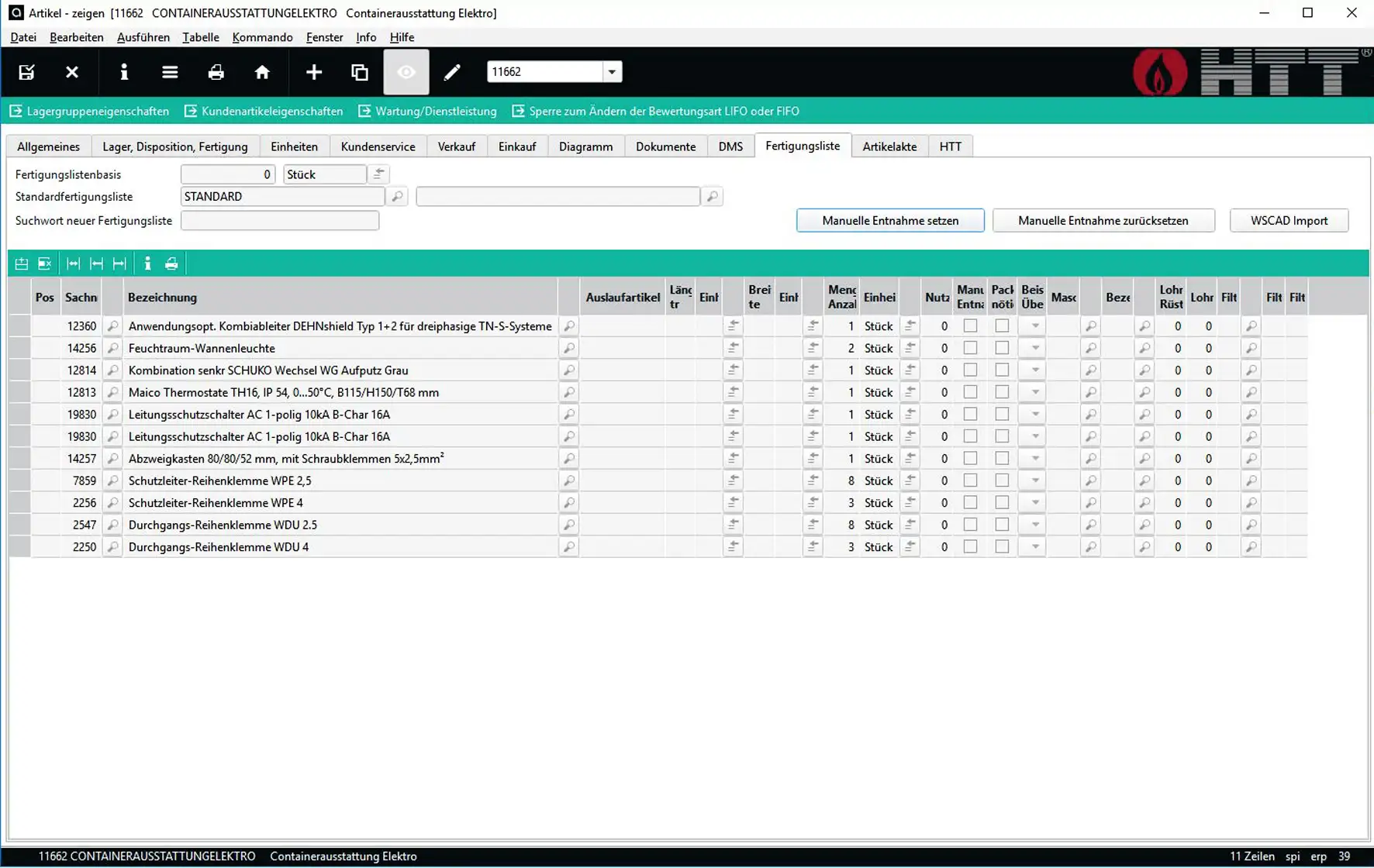
When the WSCAD component list is passed on, the ERP system knows all the commercial details of the components. If assemblies cannot be ordered fully assembled, they are cancelled automatically.
High added value thanks to standards
Every project is different. Howev-er, the basic steps involved in de-vice set-up and electrification are standardised for the wide range of variants and defined as modules at HTT. Reusable WSCAD macros display the processes along with preferred variants and correspond-ing component lists. All the hard-ware configuration information and the underlying circuit diagrams are available, either as articles stored in the master data or as an item on the project component list. For the pur-pose of purchasing, the component list is closed and becomes part of the list of materials which totals all the items with an identical part num-ber. The advantages that PLM/ERP integration brings for HTT’s design engineers through WSCAD software and wscaduniverse.com are obvious: No redundancies in material and component lists for the price and calculation overviews as well as synchronous part masters for stock on hand and replacement. “Our WSCAD- abas integration has made our collaboration with our colleagues in Purchasing so much more efficient and relaxed”, explains Frank Spieker, Head of Electrical Engineering, HTT ENERGY. He explains: “It only takes a single click to transfer the component list. The same goes for preliminary orders and changes: we have a process that we can rely on as abas recognises the various versions of a project component list. The system displays planning changes and derives the correct actions from these”.
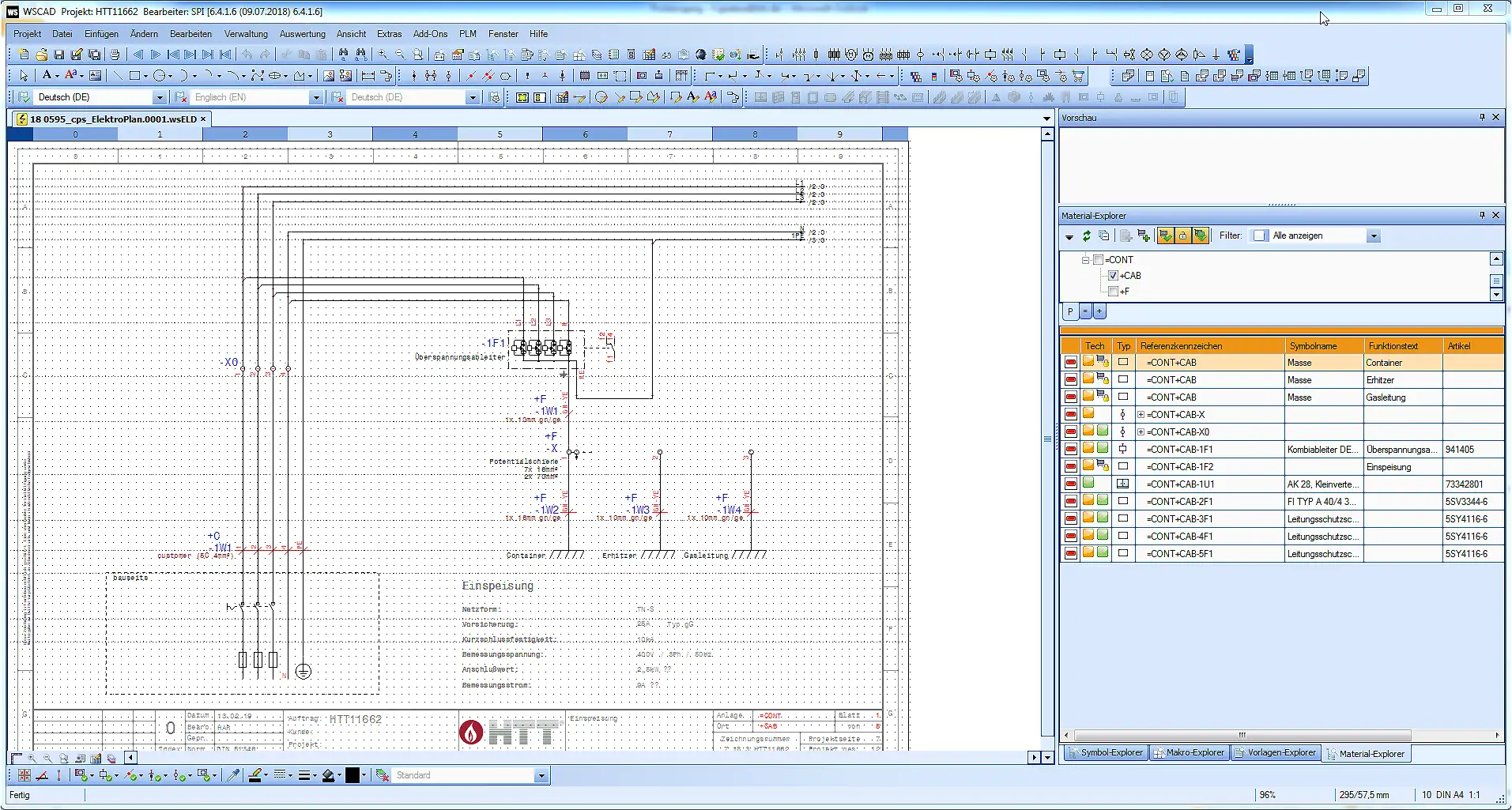
The WSCAD Material Explorer only offers design engineers parts recognised by the ERP system when the component list is passed on. WSCAD synchronises the databases regularly in order to ensure this.
By reducing the variety of components, we have put our Purchasing department in a stronger negotiating position when dealing with our suppliers. This has reduced the stock in the warehouse, which naturally also means that we have less capital tied up. This resulting savings potential has provided opportunities for investing in further projects as well as in research and development.
Technology and Purchasing work together digitally in close collaboration
For HTT, it was definitely worth all the effort. Today, order processing is about 30 per cent quicker than before and the use of standardised assemblies along with uniformly structured system documentation makes the work of the technical team easier. “These measures have enabled us to optimise our processes and reduce our costs considerably”, says Erik Theilig, commercial director at HTT ENERGY. “By reducing the variety of components, we have put our Purchasing department in a stronger negotiating position when dealing with our suppliers. This has reduced the stock in the warehouse which naturally also means that we have less capital tied up. The resulting savings potential has provided opportunities for investing in further projects as well as in research and development”.
WSCAD experts help find the perfect solution
During a two-day workshop, the project teams from HTT and WSCAD specified the details of the new interdepartmental information flows in relation to part data and component list management. “The experts from WSCAD know what they are talking about. They provided us with appropriate results-oriented guidance over the two days. We are also satisfied with the support we get, which is always provided promptly. Our questions are answered quickly and competently”, says Frank Spieker, summing up the situation. Together they found transparent solutions and implemented them without delay. After just eight months, HTT ENERGY was able to put this new solution into operation.
Download Case Study
This case study is intended exclusively for your personal use. Any reproduction or publication requires our express written consent.


