
Max Planck Institute Case Study
The Problem:
The Max Planck Institute needed to manage the complex electrical engineering and documentation requirements of the large-scale Wendelstein 7-X fusion experiment, involving extensive systems, sensors, actuators, control systems and diagnostics. The project required detailed, coordinated planning across electrical, cabinet and fluid engineering disciplines.
The WSCAD Solution:
Using WSCAD SUITE from the beginning of the project, the engineering team could create and manage circuit diagrams, cabinet layouts and fluid plans in one integrated environment. This streamlined planning and documentation, supported collaboration with external suppliers and enabled the automatic generation of comprehensive project documentation and manufacturing data.
BSG Achieves Up to 90% Faster Project Planning with Automated Electrical Engineering Using WSCAD and ONEtool
The Max Planck Institute for Plasma Physics (IPP) is one of the largest centers for fusion research in Europe. In December 2015, the scientific operation of the Wendelstein 7-X fusion experiment was started at the Greifswald site. On February 3, 2016, Chancellor Angela Merkel personally pressed the Start button to initiate the first ignition of the hydrogen plasma. The entire electrical engineering for this was planned by researchers with the E-CAD software from WSCAD.
At a Glance
Customer
- Max Planck Institute for Plasma Physics (IPP), a leading European fusion research centre.
- Wendelstein 7-X (W7-X), the world’s largest stellarator fusion device, based in Greifswald.
- Developing fusion technology by studying and controlling extremely hot hydrogen plasma.
- www.ipp.mpg.de
Challenge
- Managing electrical systems with many actuators, sensors, controls and diagnostics.
- Managing electrical, cabinet and fluid engineering across teams and suppliers.
- Creating accurate plans, cable lists and documentation for construction and commissioning.
Solution
- Design electrical, cabinet and fluid engineering in one place.
- Create diagrams, layouts, lists and project documents quickly.
- Share plans and data with suppliers to keep projects consistent.
Benefits
- One platform for electrical, cabinet and fluid engineering.
- Automated plans and documentation reduced manual work.
- Centralised data and reusable macros improved design speed and consistency.
WSCAD disciplines and add-ons used:


The Max Planck Institute for Plasma Physics (IPP) is one of the largest centers for fusion research in Europe. In December 2015, the scientific operation of the Wendelstein 7-X fusion experiment was started at the Greifswald site. On February 3, 2016, Chancellor Angela Merkel person-ally pressed the Start button to initiate the first ignition of the hydrogen plasma. The entire electrical engineering for this was planned by researchers with the E-CAD software from WSCAD.
The goal of the plasma research in Greifswald is to replicate the energy production of the sun on earth by generating energy from the fusion of atomic nuclei. Wendelstein 7-X (W7-X) is the largest fusion device of the stellarator type and a key experiment in international fusion research. It is intended to demonstrate the suitability of this particular type of plant for power generation.
Powering the Future of Fusion
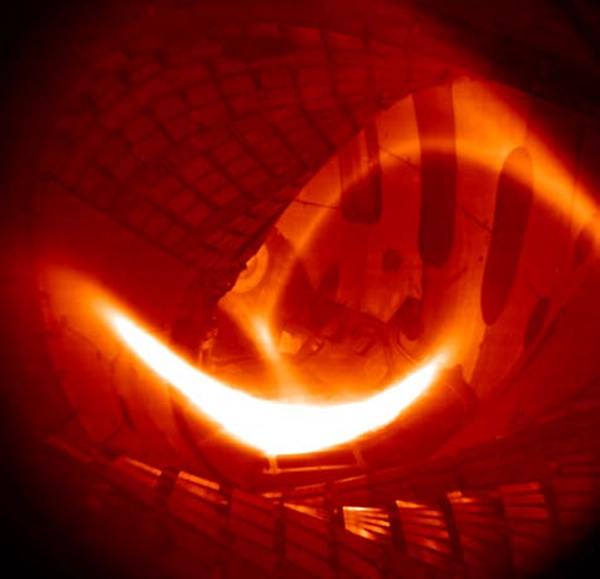
The core of the system consists of 50 non-planar and 20 planar super-conducting magnetic coils, which in-duce a magnetic field that confines the hydrogen plasma heated to 100 million degrees. In its form, the whole work of art is somewhat reminiscent of an over-sized donut. Ten megawatts of power are needed for the ignition, and a cur-rent of 18,500 amperes flows through the coils. To make this possible, the coils are cooled down to less than four degrees Kelvin, close to absolute zero. Just the helium plant needed for this involves almost unimaginable dimensions. The first successful plasma test was preceded by several years of planning and construction work for the plant. The entire electrical engineering planning and documentation for this was performed by the Max Planck engineers right from the beginning by using the E-CAD solution from WSCAD. “This means that we essentially participated in almost all the development stages of WSCAD and were frequently provided with new functions”, says Jörg Schacht, Head of the CoDa (Control and Data Acquisition) Group.
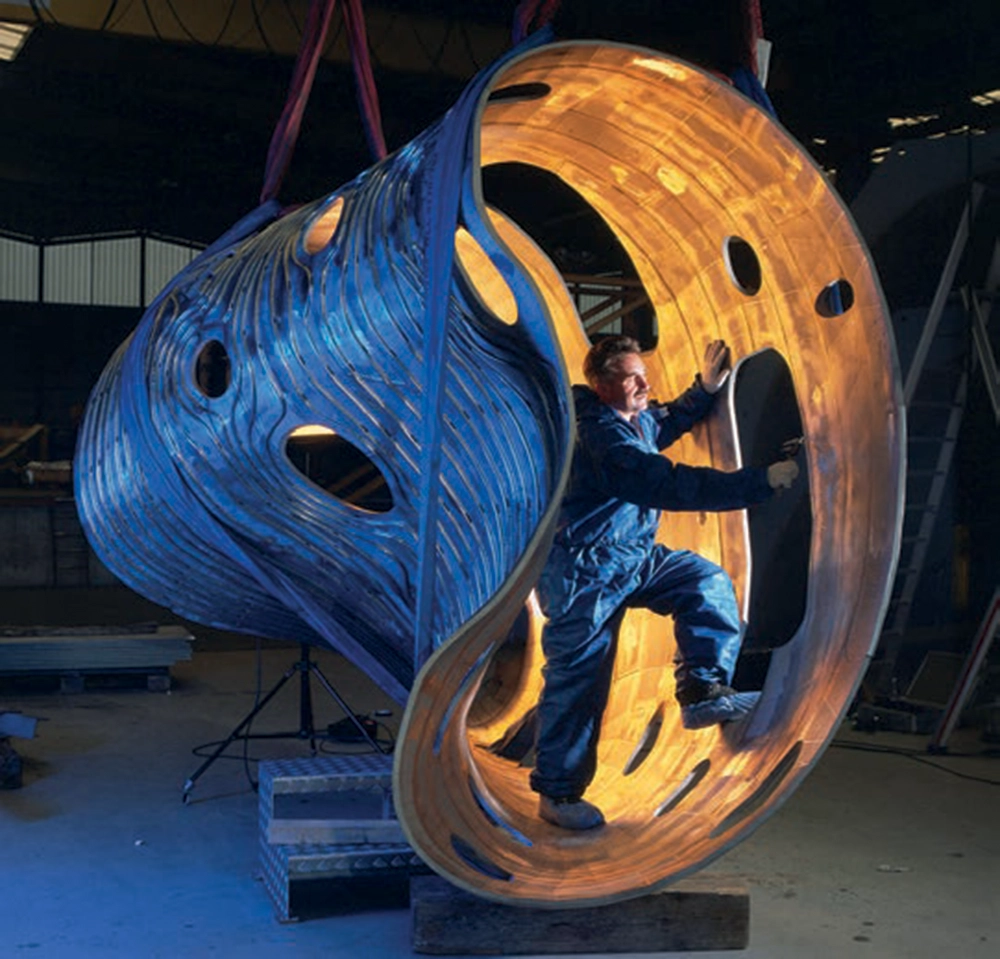
Man-sized tube of the plasma vessel in which the plasma is eventually formed.
Managing Complex Electrical and Control Systems
“Today, we use the WSCAD SUITE disciplines of Electrical Engineering for circuit diagrams, Cabinet Engineering for cabinet layouts and Fluid Engineering for pneumatic and fluid plans. We essentially had to plan for all actuators and sensors, including the data acquisition, a variety of control systems, the entire infrastructure and various diagnostic components”. For example, for the construction of the data acquisition and control of laser diagnostics interferometry – a diagnostic system to determine the plasma density. A laser beam is passed through the plasma and changes its properties, depending on the plasma density. The technical group CoDa first receives a requirements specification document. In it, the requesting department specifies the precise characteristics for data acquisition and for controlling the W7-X component to be built, including all subcomponents that must be installed in the project. All other subcomponents are defined by the respective planners.
From Electrical Planning to Cabinet Construction
The requirements specifications and the preliminary planning for electrical engineering then serve as the basis for creating the technical specification document for the control and data acquisition for the project. In the electrical engineering planning, the requirements of the technical specifications are implemented, and the required circuit diagrams are created. This, in turn, serves as the basis for planning the cabinet layouts. The actual cabinet construction occurs partly in the IPP itself, but is mostly awarded externally through public tenders. Some of the suppliers also work with WSCAD – an added advantage, since they get the original WSCAD plans after the winning bid and can immediately continue working on this basis. For all others, the materials, cable and connection lists are exported from the WSCAD software and handed over.
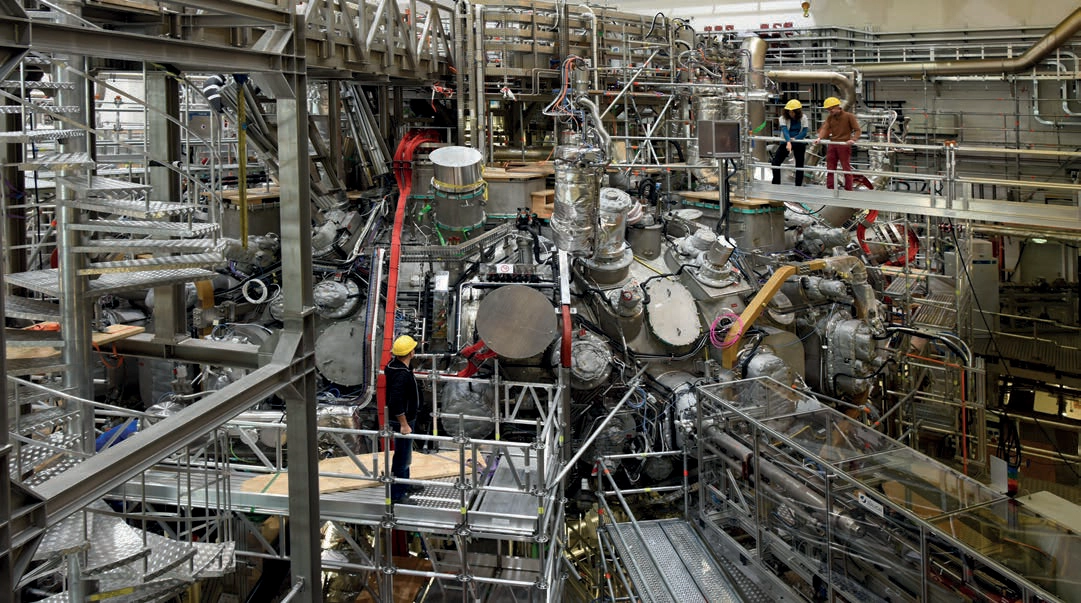
The size of the entire Wendelstein W7-X facility gives an impression of how many cabinet layouts and electrical plans were needed until the first successful plasma test
Seamless Planning, Wiring and Commissioning
The electrical plans contain all the information for the subsequent wiring of the electrical cabinets, power supplies, measuring points or actuators. The fluid plans for compressed air-driven components likewise come from an external service provider, who also works with the WSCAD software. This has the advantage that the supplied plans can be immediately linked to the symbols used in the respective schematics and cabinet layouts. For projects of this magnitude and such a long duration, milestones such as the commissioning of individual components are always among the highlights. For example, the commissioning of further diagnostics. To answer all scientific questions relating to an operational power plant in the future, there will be many more experiments with the W7-X. This will be accompanied by the further expansion of the plant and the job of planning with WSCAD.
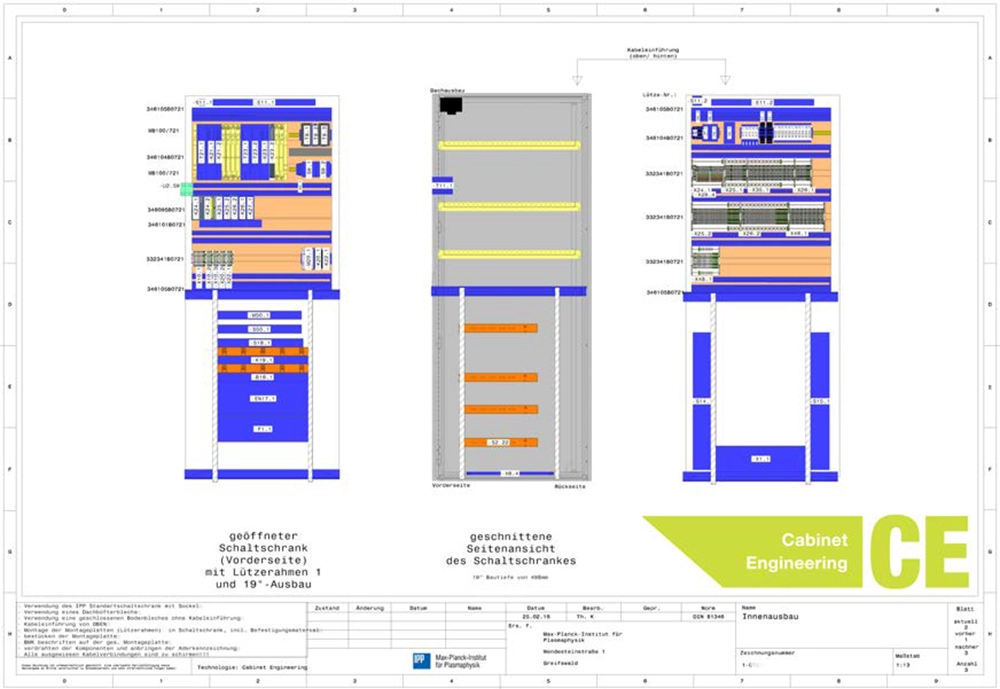
One of the many cabinet layouts for the Wendelstein 7-X fusion experiment using the WSCAD SUITE Cabinet Engineering discipline
Over the years WSCAD software has been a great help in engineering and documentation”, explains Jörg Schacht. “It is good and easy to use and the foundation for our entire electrical engineering and cabinet engineering
Integrated, Scalable Engineering with WSCAD SUITE
The integrative approach of the modular and scalable WSCAD SUITE enables cross-disciplinary and continuous planning and documentation of electrical equipment, machinery and building automation. All symbols are located centrally in an extensive database included with the software, and individual or project-related data pools are also possible. Over one million symbols and part data from more than 125 manufacturers are available at wscaduniverse.com in both the WSCAD and Eplan formats under the web address with the same name. The use and provision of the product data is free for users and the manufacturers of parts and equipment.
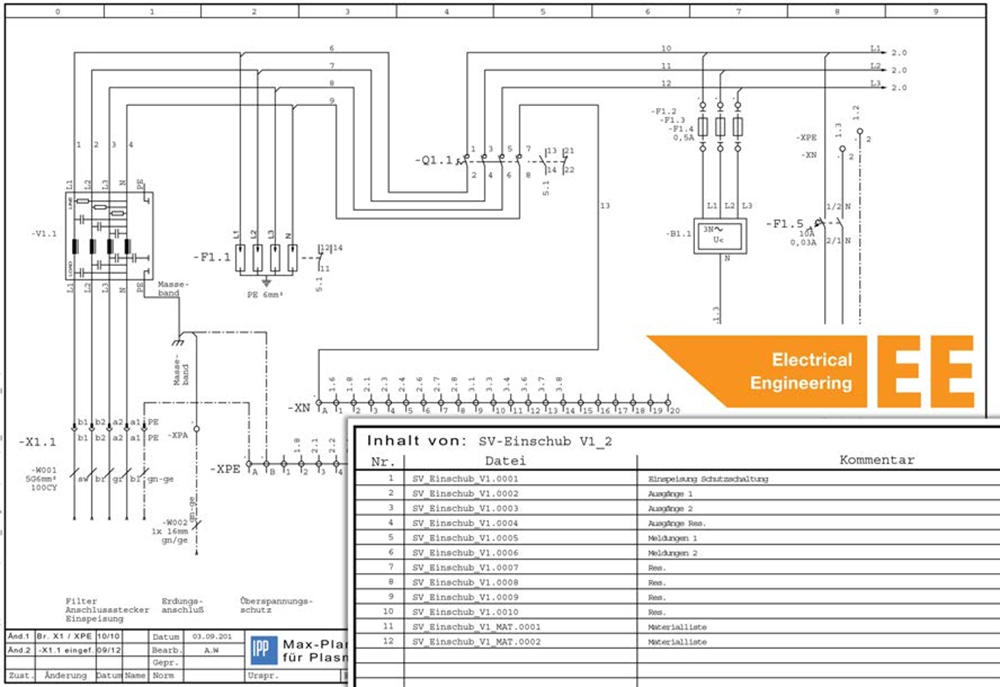
All electrical plans for the Wendelstein 7-X fusion experiment were created with the WSCAD SUITE Electrical Engineering discipline.
In Conclusion: Integrated Engineering from Design to Production
The coil of a valve in the fluid plan is the same as in the circuit diagram or the cabinet configuration. At the touch of a button, the WSCAD software creates comprehensive documentation that is fully compliant with directives and standards, including individual checklists and acceptance protocols. With a simple click on a symbol in the intelligent PDFs, installers and service technicians on site can easily switch from the fluid plan to the schematics and to the cabinet. No additional viewers are required.
Thanks to open interfaces, the integration with enterprise PDM / PLM and ERP systems is easily achieved, and all data generated with the WSCAD SUITE are available for the production of wires and cable bundles, label printing, mounting plates and cabinet doors on NC machining centres.
Macros and macro variants in all disciplines speed up the design process, and the Project Wizard generates complete plans across multiple plan pages as if guided by a magic hand. Furthermore, by using the Automation interface (AI), several WSCAD-independent product configurators can be used to make the WSCAD software automatically generate plans and documentation while running in the background.
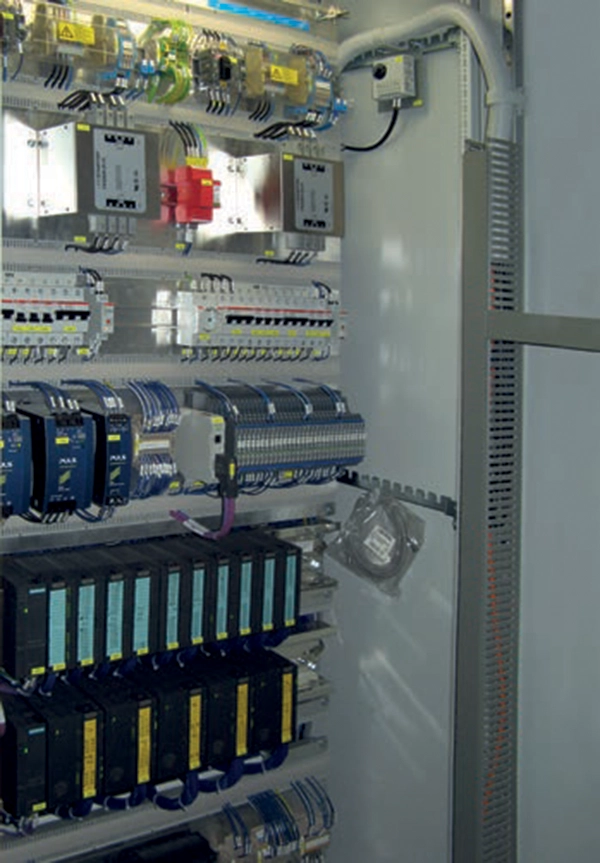
One of the many cabinets, engineered using the WSCAD SUITE Cabinet Engineering discipline
Download Case Study
This case study is intended exclusively for your personal use. Any reproduction or publication requires our express written consent.


