
The Niemann GmbH Case Study
The Problem:
NW-Niemann GmbH faced the challenge of integrating engineering and manufacturing processes for control panel production, requiring a modern electrical CAD system that could handle customised designs, accept data from various planning systems, and directly control NC machines for wire and cabinet manufacturing. Their previous workflow involved redundant data entry and reliance on multiple software tools, leading to inefficiencies and higher costs.
The WSCAD Solution:
The adoption of WSCAD SUITE addressed these issues by enabling seamless data flow, eliminating the need for additional mechanical CAD software, and significantly reducing both engineering time and overall costs.
Highly specialised control panel manufacturers need to be equally proficient in both the technology and the skills of the trade. In addition to the appropriate machines for production, it is crucial that they also have the right CAD tools. Managing Director Holger Pawel from NW-Niemann GmbH Elektrotechnik provides some insight into how he and his team have mastered the daily challenges.
At a Glance
Customer
- NW-Niemann GmbH, Vechta, Lower Saxony.
- Panel Builder.
- 70 employees.
- www.nw-niemann.de
Situation
- Procurement of NC machines for the production of wires and cabinet housings.
- Integrating engineering and manufacturing through modern electrical CAD software.
- Control of NC machines directly from the electrical CAD software.
Results / Benefits
- Continuous engineering using one platform.
- Capture data once and use it continuously.
- Use the data for production with no additional mechanical CAD software required.
- Faster with fewer errors.
WSCAD disciplines and add-ons used:


Mastering Complex Control Panel Design with the Right CAD Tools
The NW-Niemann GmbH develops and manufactures switchgear for complex control and low-voltage distribution systems up to 4000 A. Over 60 employees are involved in the design, planning and production at two locations in the Lower Saxony district town of Vechta. Compliance with VDE regulations and EMC directives is the first and topmost quality commandment for the ISO-certified company. Customised test reports then build on this and underpin the excellent quality of products. The customers of NW-Niemann include renowned companies from the agricultural sector, mechanical engineering companies involved in machine and plant construction, as well as heating/ventilation and air-conditioning.
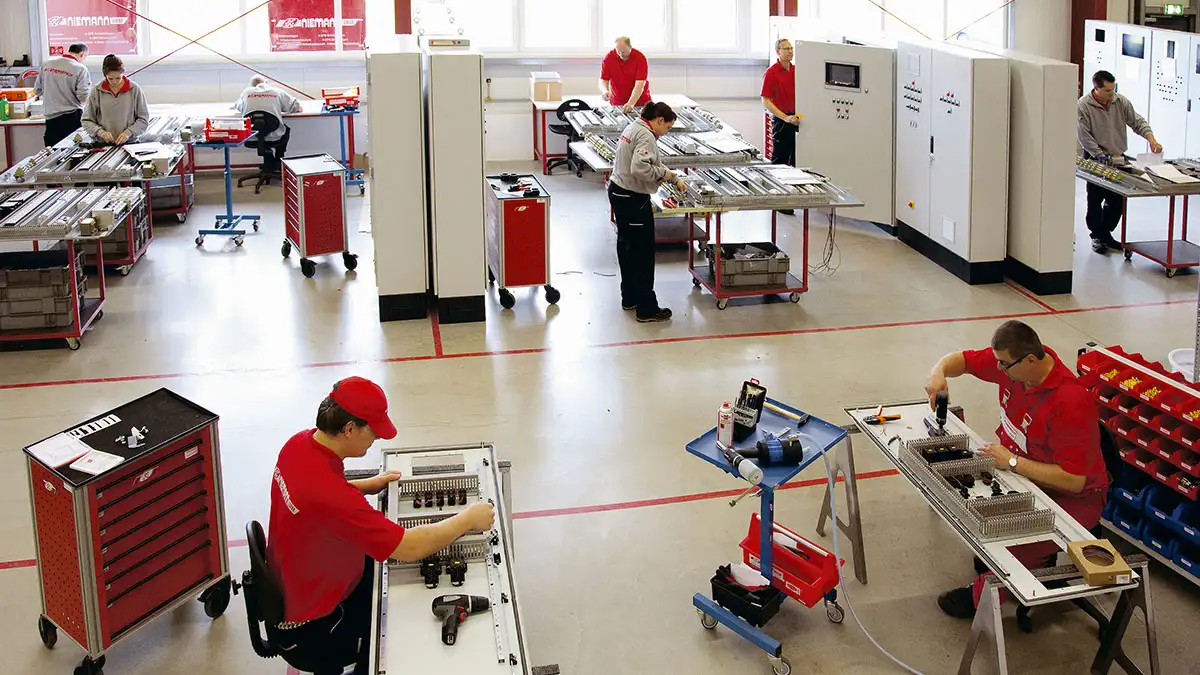
Over 60 employees of NW-Niemann design, plan and produce switchgear for complex control and low voltage distribution systems up to 4000 A at two locations in the Lower Saxony district town of Vechta.
One Platform, From Electrical Design to Cabinet Production
In order to manufacture efficiently and professionally, NW-Niemann has invested in Komax machines for the production of wires and wire sets and established its own sheet metal processing centre with NC production equipment, a Perforex LC 3015. It quickly became clear that a suitable CAD system was required in the next step. The demands of the planning and CAD design department are high: they need to be able to independently develop customised small controllers, schematics and ICA (instrumentation, control and automation) switching systems themselves. To build control cabinets, the NW-Niemann engineers must be able to accept data from other planning systems and to control the in-house production without detours. “In this context, we comprehensively analysed and evaluated two well-known electrical CAD solutions within the framework of a test setup”, says Managing Director Holger Pawel. “Functionally, there were no significant differences, but certainly in terms of price.
A Cost-Effective Choice Backed by Trusted Support and Fast Innovation
When you add up the overall solution we need, including wire routing and manufacturing integration, WSCAD was more cost-effective by a factor of three. Even the annual maintenance costs have a significantly lower impact on our bottom line.” It quickly became clear that the business decision would fall in favour of the new electrical CAD system from WSCAD. But this was coupled with a drawback: at the time of the purchase, there was still no interface to control the Komax machine at NW-Niemann for the wire production. “The WSCAD sales engineer did, however, after consulting with management, promise to implement this important interface for us as soon as possible. And he kept his word “, recalls Holger Pawel. “The entire consulting and sales process was extremely transparent and trusting.” Already in the early summer of 2016, NW-Niemann could work with the promised interface, and by September, it was included by default in WSCAD SUITE.
Faster Access to Accurate, Up-to-Date Component Data
NW-Niemann accepts the ICA schematics or individual customer requirements, outlines the structure of the switchgear equipment and calculates the pricing for offers. After receiving an order from their client, the associated schematics are created using WSCAD. “In the past, we used to create schematics with simpler electrical CAD software”, says Holger Pawel. “Today, we develop them already with a view to the following cabinet construction with subsequent production – all on one platform and with a single software program.” NW-Niemann thus avoids redundant work, saves time and increases quality. If the schematics and documentation are supplied by the clients, they go straight into the cabinet configuration. Regardless of the supplied electrical CAD format, the exported or manually created materials list is read into WSCAD using a wizard. Matching with the part database during the import prevents redundant data. If a required part is not available locally, it can be easily found via the free access to wscaduniverse.com, which is included with the maintenance contract of the electrical CAD software. “Part vendors had already confirmed to us prior to our procurement of WSCAD that they prefer to make the part data of their products available on wscaduniverse.com because, in contrast to other providers, they are not charged for the presentation here. For us as users, this increases the probability of finding more and, most importantly, the latest data immediately. We do not have to go on a cumbersome third-party search.”
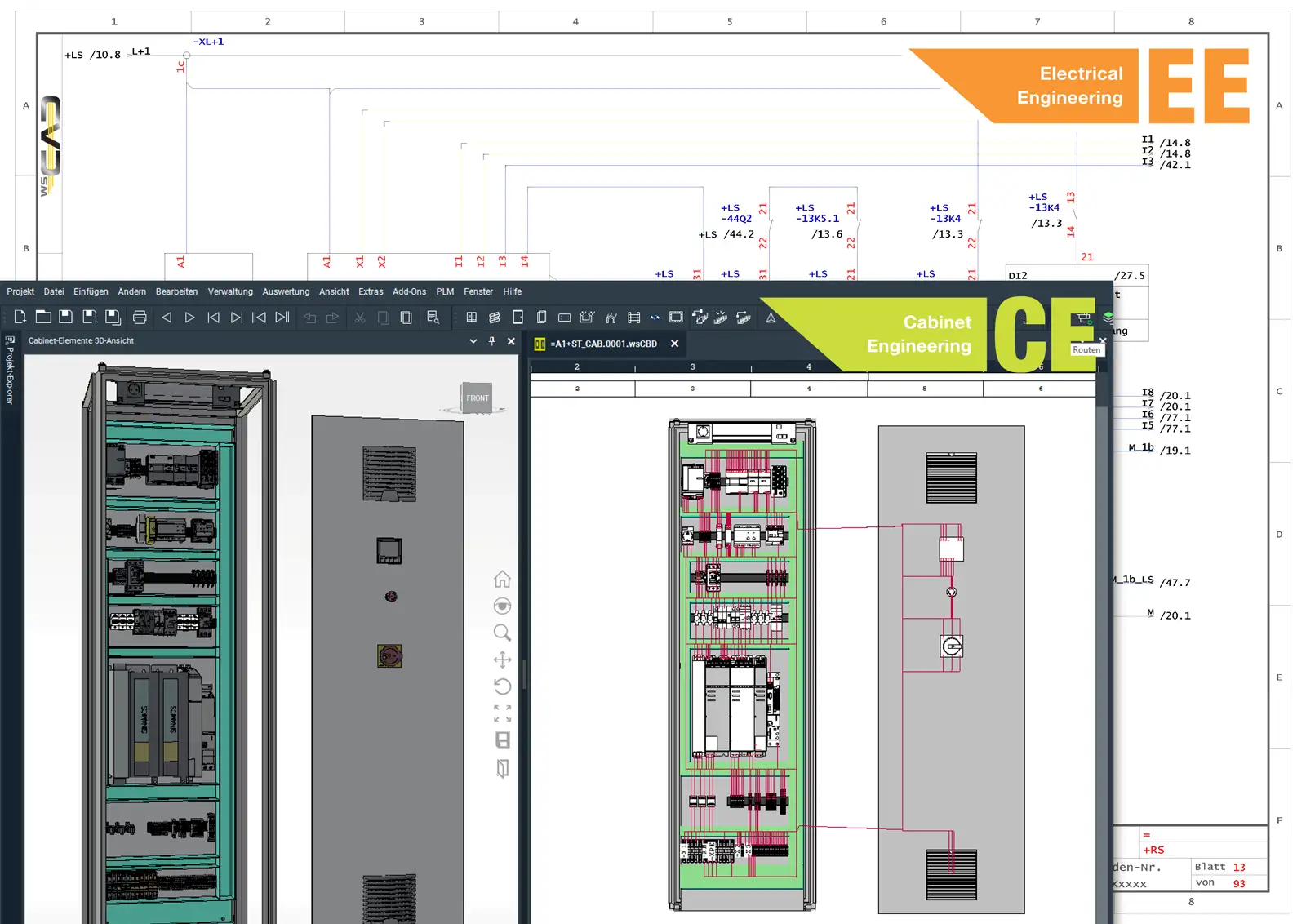
Schematics are developed in the Electrical Engineering discipline using the WSCAD software. Cabinet construction with Cabinet Engineering follows seamlessly; schematics from other electrical CAD systems can also be imported.
Functionally, there were no significant differences, but certainly in terms of price. Including wire routing and manufacturing integration, WSCAD was more cost-effective by a factor of three.
Smarter Cabinet Design with Faster, More Accurate Workflows
In the next step, the experience and expertise of the designers come into play: If the cabinet structure is not specified, they estimate its size and determine how the mounting rails, power supply and other components should be arranged. They then simply put this information into the drawing – a process that can be significantly accelerated using macros. By using macro variants, different manifestations of a macro can be created. This enables a 25A feed, for example, to be easily changed to a 63A variant in all plans at a later date – a highly efficient time-saving and error-free method. The components planned or imported into the schematic via a materials list appear in the Materials Explorer and can also be dragged and dropped into the cabinet. The software supports this step with automatic left or right alignments and the snapping of components on the rail accurate to one tenth of a millimetre. If all components are green, this means that everything is in and nothing has been forgotten. Those who want better spatial awareness of the cabinet structure can simply switch to the 3D control view and immediately see whether the cabinet door can be shut.

More than 2.2 million parts and symbols for electrical CAD can be found via free access to wscaduniverse.com.
Automated Wire Routing for Faster, More Reliable Production
“A very useful function for us is the wire routing”, says Holger Pawel, while commending the next step with the WSCAD software. The information required for routing is either taken directly from the previously created schematic or is imported via terminal charts and connection lists that were exported earlier from third-party electrical CAD systems. A simple click on the “Routing” button is enough to make all the connections with the wire lengths already calculated. Even the current filling degree of the channels is indicated visually. Red means “too full”. Rerouting can then be optionally enforced via a setting, or larger cable channels must be used. This is followed by one of the most important steps for NW-Niemann GmbH: all the generated data is available for manufacturing at the touch of a button. For the production of wires and wire sets, the data is passed directly to the Komax machine without any detours. Those who do not have such a system can alternatively start the CadCabel application via a menu item and transfer all the necessary data to the service provider of the same name directly from within the WSCAD software. The machining of the mounting plates and cabinet doors is carried out at the NW-Niemann GmbH on a Perforex LC 3015.
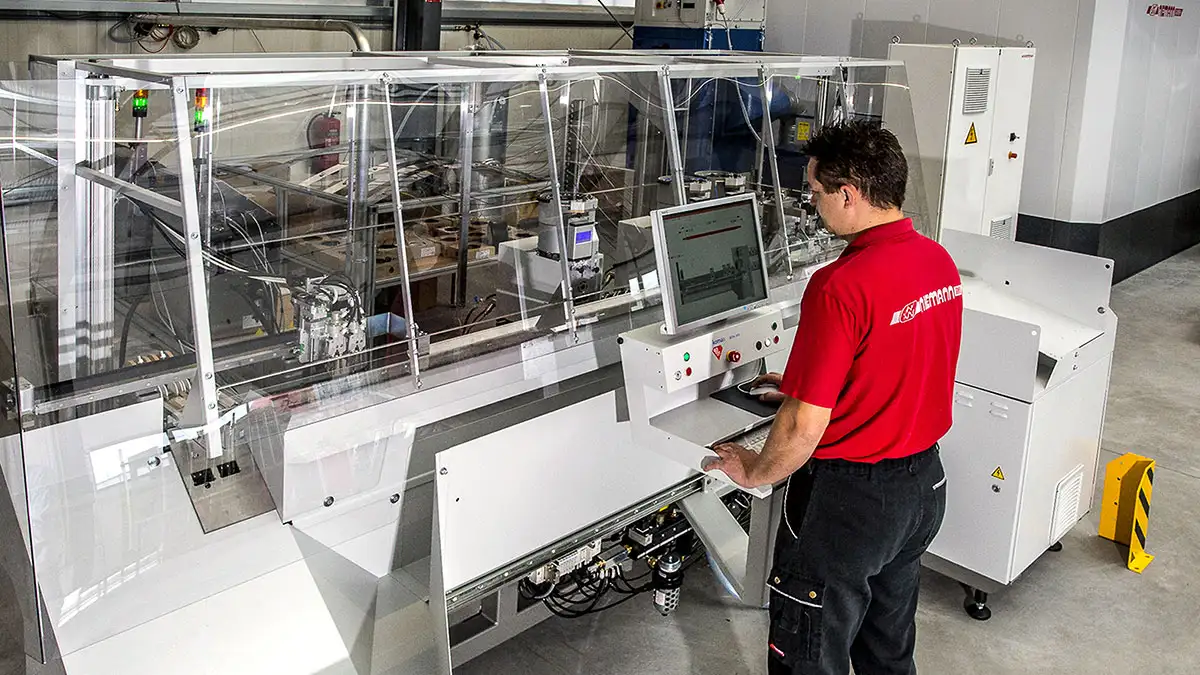
For the production of wires and wire sets, the NW-Niemann GmbH has invested in an NC machining centre from Komax – the data for this comes directly from the cabinet layout created with the WSCAD software.
Next Step: From Digital Design to Automated Production
The selectable settings correspond to the capabilities of the respective machine. “Until now we had to use additional mechanical CAD software for this production step,” explains Holger Pawel. “With WSCAD, we can now send the data directly to our laser machine. The previous parallel drawing in the mechanical CAD system has been eliminated.” This too ultimately saves time and improves the quality. The costs for a possibly unnecessary software license are also saved. This is followed by one of the most important steps for NW-Niemann GmbH: all the generated data is available for manufacturing at the touch of a button. For the production of wires and wire sets, the data is passed directly to the Komax machine without any detours.
Those who do not have such a system can alternatively start the CadCa-bel application via a menu item and transfer all the necessary data to the service provider of the same name directly from within the WSCAD software. The machining of the mounting plates and cabinet doors is carried out at the NW-Niemann GmbH on a Perforex LC 3015. The selectable settings correspond to the capabilities of the respective machine. “Until now we had to use additional mechanical CAD software for this production step,” explains Holger Pawel. “With WSCAD, we can now send the data directly to our laser machine. The previous parallel drawing in the mechanical CAD system has been eliminated.” This too ultimately saves time and improves the quality. The costs for a possibly unnecessary software license are also saved. Parallel to the manufacturing, all the components required for production can be procured on time; project-specific material lists can be created and compared with the ERP system for this purpose. Then follows the assembly of the pre-machined components and their wiring in the main assembly.
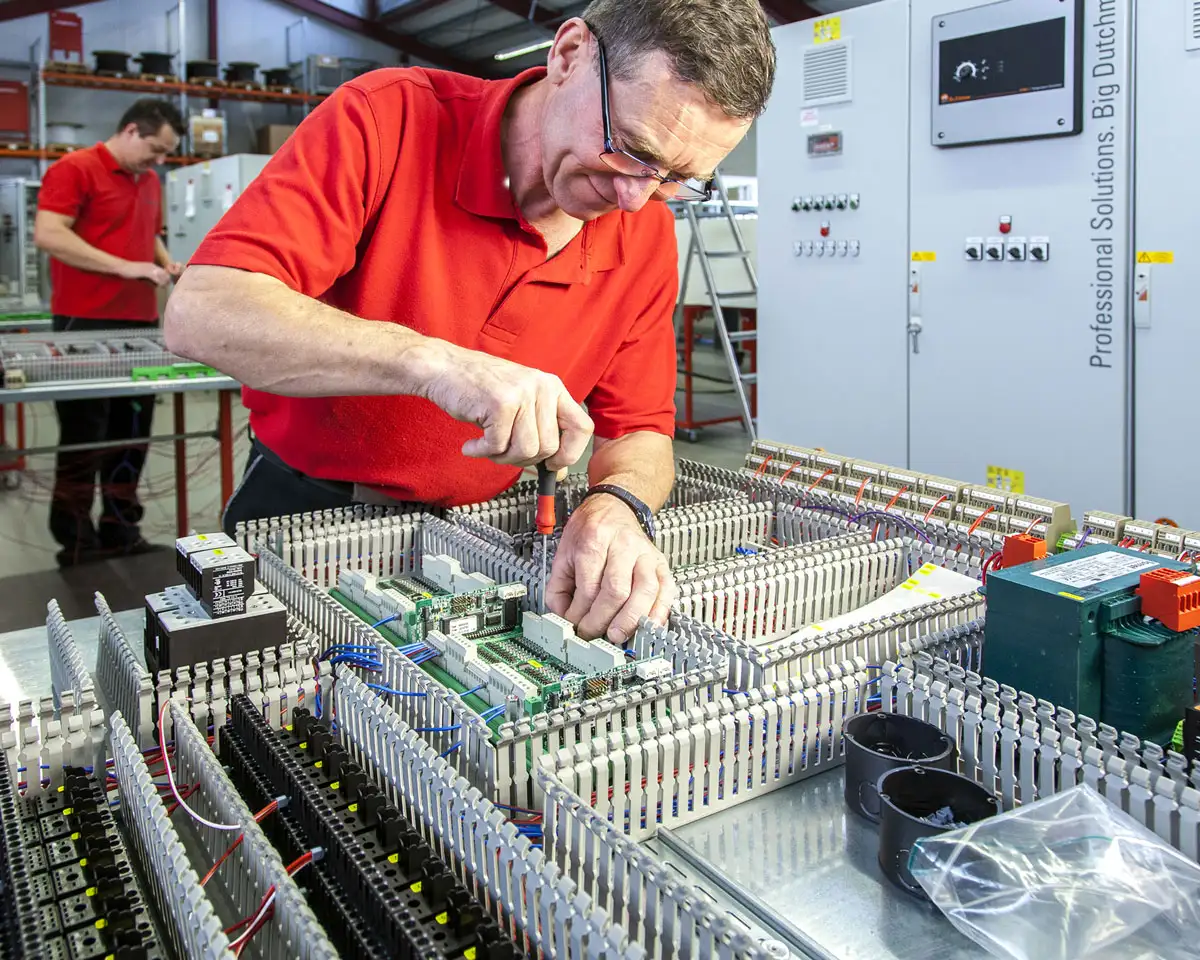
Compliance with VDE regulations and EMC directives is the highest quality commandment for the specialists at NW-Niemann when installing and wiring the switchgear. Customised test reports underpin the excellent quality of the products.
Until now, we had to use additional M-CAD software for the design of mounting plates and cabinet doors. With WSCAD, we can now send the data directly to our laser machine. The work in the mechanical CAD software is not necessary any more.”
The specialists at NW-Niemann pay particular attention to the subsequent electrical and technical quality control: visual checks, measurements based on previously created protocols, one final inspection, and test results created individually for the system complete this step. The automatically generated documentation is typically in the form of intelligent PDF files. In other words, installers and service technicians on site do not need any special viewers and can instantly switch by clicking on a cross-reference from the cabinet layout to the schematics or other plans in the associated disciplines of the WSCAD software. Working with the WSCAD software makes it possible to handle the entire development, planning and documentation on a single platform and with part data from a central database across the disciplines of electrical engineering, control cabinet construction, process and fluid engineering, building automation and electrical installation. The PLM/ERP Integration facilitates comparisons with data from other systems, and mechanisms to automate engineering processes accelerate the work of several weeks down to just a few days and possibly even a few hours. With 30 years of experience and a comprehensive range of services from the portfolio of their Global Business Services, WSCAD provides invaluable assistance in the implementation, operation and optimisation of the WSCAD application and efficient development processes. The overall procurement and maintenance costs of the WSCAD solution are about half to two-thirds lower than other solutions on the market.
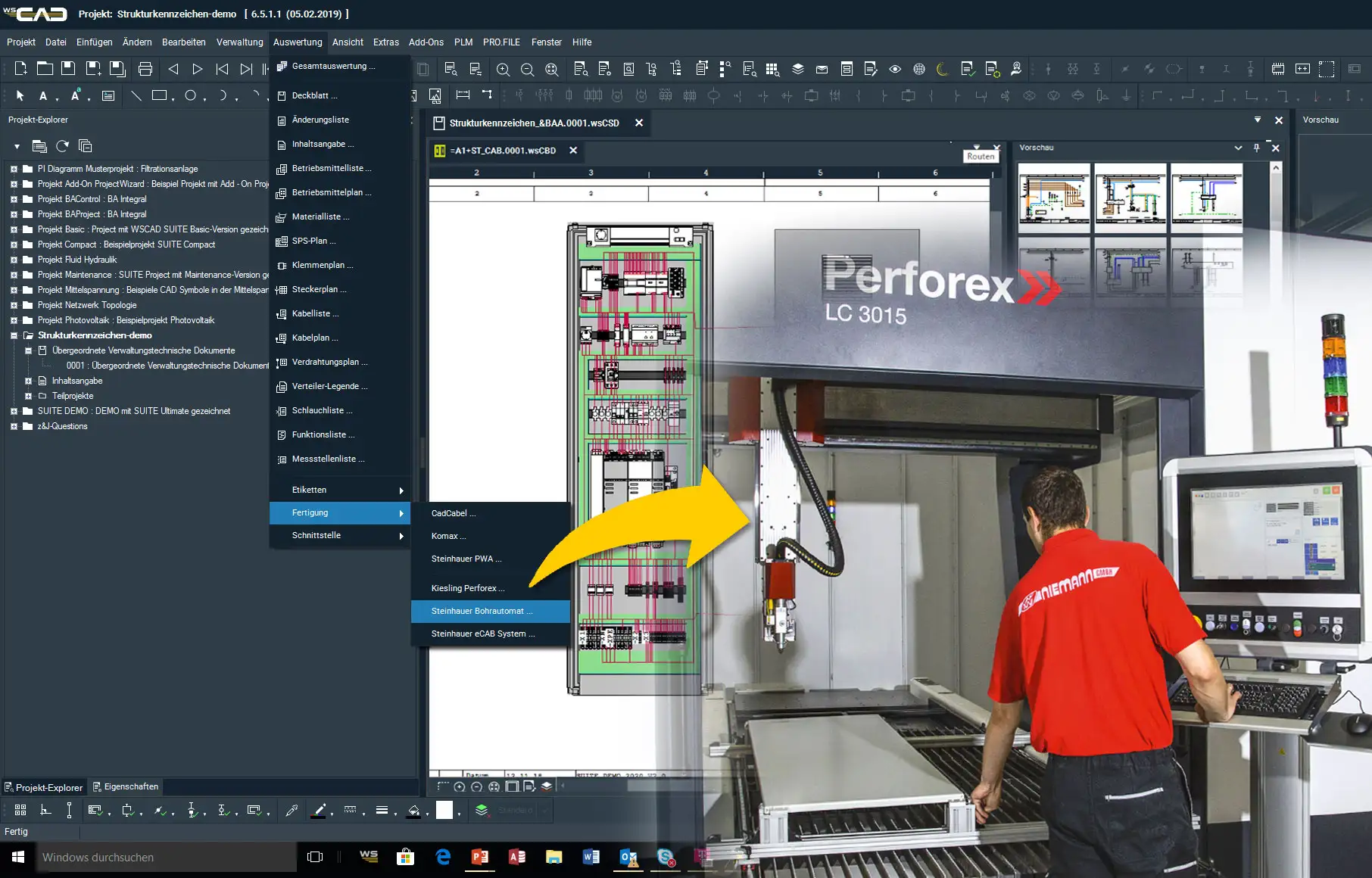
Doors and mounting plates are made at NW-Niemann GmbH under NC control on a Perforex LC 3015 – with data from the WSCAD software. The previously required additional M-CAD software is no longer needed.
Download case study
This case study is intended exclusively for your personal use. Any reproduction or publication requires our express written consent.


