
The German Mechanical and Plant Engineering Case Study
The Problem:
Caterpillar Energy Solutions’ product configurator allowed sales teams to quickly create customised solutions, but this increased the complexity and workload for electrical engineering. Manual data collection and documentation took several hours, and the need for multiple languages and changing customer requirements created bottlenecks, leading to some design work being outsourced.
The WSCAD Solution:
Caterpillar integrated its existing product configurator with WSCAD SUITE using the Automation Interface. Configuration data is automatically transferred to WSCAD, which generates complete electrical plans and documentation—including the required language—at the push of a button, with no manual designer interaction.
Automating Electrical Design with WSCAD
Caterpillar Energy Solutions needed to reduce the time and complexity involved in creating electrical documentation for customised projects. By integrating its product configurator with WSCAD’s Automation Interface, complete electrical plans and documentation can now be generated automatically in seconds, freeing engineers to focus on more complex projects and reducing the need for outsourcing.
At a Glance
Customer
- Caterpillar Energy Solutions, Mannheim, Germany.
- Manufacturer of gas engines, electricity power plants, as well as CHP plants.
- www.caterpillar.com
Situation
- Diverse customer requirements having to offer customized solutions.
- Sales department work with a configurator.
- Time constraints in the electrical design lead to outsourcing of design tasks.
Results / Benefits
- Automatic and error-free creation of electrotechnical documents triggered by the configuration done by sales.
- Free resources in electrical construction.
- Tasks do not have to be outsourced anymore.
- Extra time to work on new projects, resulting in increased business revenue.
WSCAD disciplines and add-ons used:


German Mechanical and Plant Engineering has been successfully automating production and processes for decades and has thus established itself as a global leader. Under the concept of Industry 4.0, also known as the Internet of Things (IoT), the industrial sector is now heralding the next phase in manufacturing with self-controlling production. But what exactly is happening in the engineering and design departments, especially in the area of electrical engineering and design? The Mannheimer Caterpillar Energy Solutions GmbH took a revolutionary step forward and is now generating standardised electrical engineering plans, including documentation, directly with their existing in-house product configurator at the touch of a button. Error-free, in the shortest possible time, and with hardly any interaction required from a designer.
As part of the Caterpillar Electric Power Division with 64 locations in 20 countries, Caterpillar Energy Solutions stands for highly efficient and eco-friendly solutions for distributed power generation, and manufactures gas engines, electricity power plants, as well as CHP plants. Its global customers include, for example, operators of greenhouses, sports facilities, arenas, hospitals and airports as well as production facilities. Optimised for natural gas, biogas and other special gases, such as cogeneration power plants in the power classes from 400 kW to 4500 kW, they are deployed wherever there is no power supply available or where operators want to be self-sufficient. Their modular design enables them to be loaded and shipped in containers to their destination, where they are assembled and put into operation.
We can now plan without having to be familiar with WSCAD. Just push the button, and WSCAD generates the complete documentation for any configuration in the desired language.
Customisation Drives Engineering Complexity
The standardisation and modularisation of the product range is intended to allow customised solutions to be offered for the most diverse requirements quickly and inexpensively. A product configurator created especially for Caterpillar supports and enables the sales team to create complete and customised plants and offers with optimised equipment for specific needs within a very short time frame. However, due to the many aggregates and combinations involved, the electrical design process is not simplified and, as a result, becomes even more cumbersome and complex. While Sales can act and respond quickly by using the configurator, the pressure on the technical departments actually increases. Having more than 20 possible languages for the plans and documentation and the well-known shortage of skills across the board does not alleviate the situation.
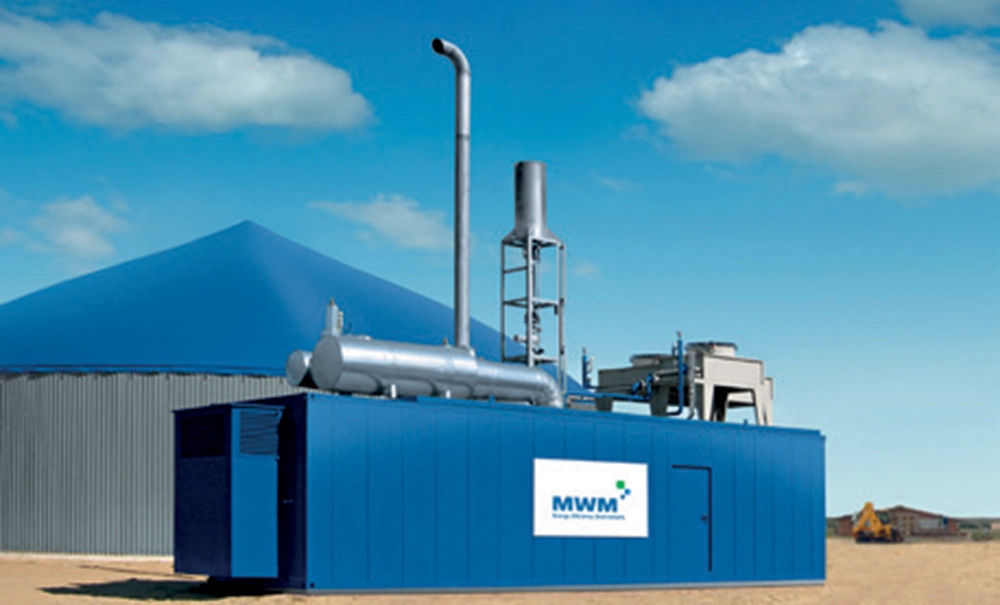
Caterpillar Energy Solutions stands for highly efficient and eco-friendly solutions for distributed power generation, and manufactures gas engines, electricity power plants, as well as CHP plants.
Automating Electrical Design to Overcome Engineering Bottlenecks
The efforts by Caterpillar to automate the development and construction process go back a long way. In the first step, the use of macros and macro variants reduced the lead time for an average project with several hundred pages from several weeks to about one week. In addition to the electrical CAD solution from WSCAD, the Project Wizard add-on also allows the automatic creation of plans; the processing time was reduced further to about one day. But even these six to eight hours could not resolve the bottleneck in the long run: new series and products needed to be developed, and the responses to changing customer requirements had to be significantly faster. Another issue that the designers faced was the fact that they had to collect and record many of the details from the sales and project management processes as well as already existing data in the organisation for electrical engineering. “Our objective was simple and clear: we were looking for a solution with which we could create the overall electrical planning and documentation without manual intervention and with minimal effort“, said Andreas Dworzsak, electrical engineer and developer at Caterpillar Energy Solutions, when describing the initial situation.
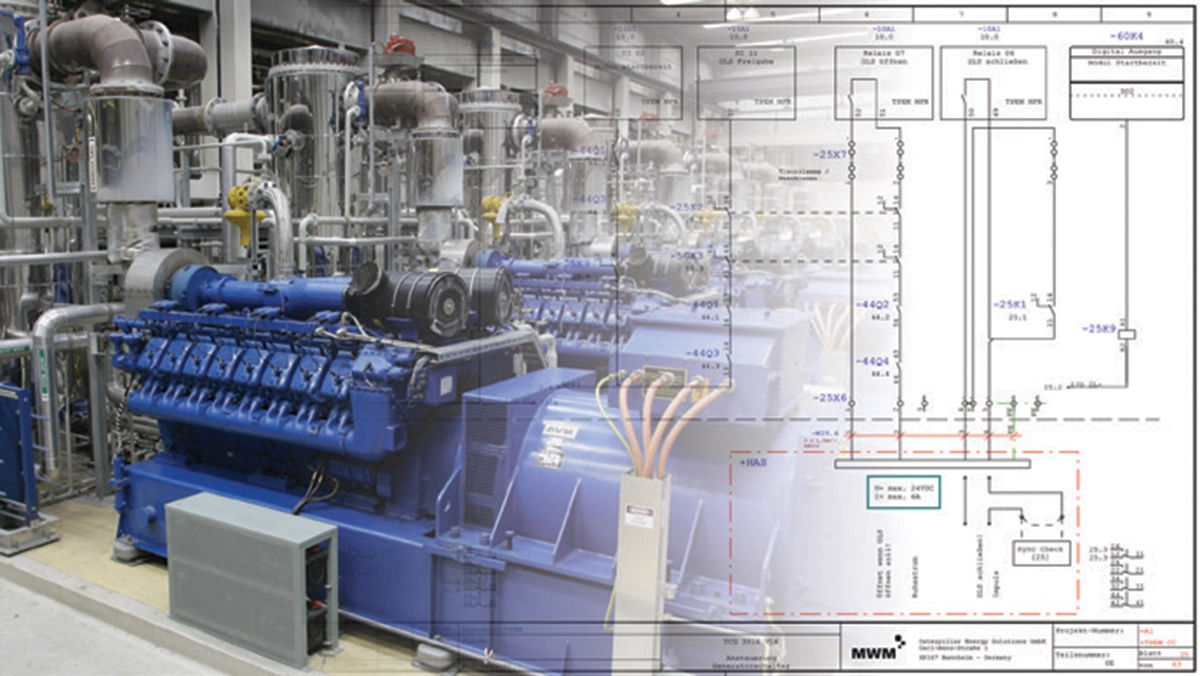
Seven MWM gas gensets from Caterpillar Energy Solutions provide power for the water supply of the 3.7-million-strong metropolis of Melbourne. The electrical engineering planning and documentation for the machines and systems are done using the electrical CAD solution from WSCAD.
A Solution Without Replacing the Existing Configurator
As a possible solution, the favoured idea was to get the electrical CAD software to prepare all plans and documentation fully directly from within the product configurator. With this requirement in hand, Caterpillar initially turned to a well-known vendor on the market. Their solution was short and sweet: to replace the customised configurator that was individually created for Caterpillar by their own proprietary product. But this would have meant the entire transfer of know-how from the currently used tool to the new product in addition to the purchase of a new configurator. Too time-consuming and too expensive. Especially since a transition from the WSCAD software to the electrical CAD solution of the new provider, including all documents, would have been mandatory. In the second attempt, Caterpillar Energy Solutions therefore approached WSCAD and was welcomed with open ears.
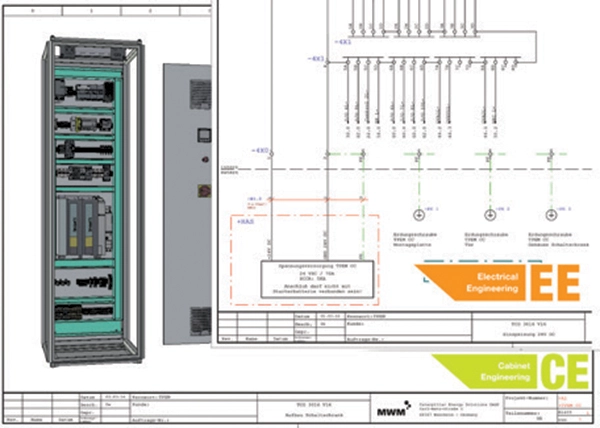
Circuit diagrams, control cabinet assemblies and much more: The complete electrical engineering planning and documentation of the cogeneration power plants occurs with the respective disciplines from the WSCAD software.
Automated Engineering from Any Product Configurator
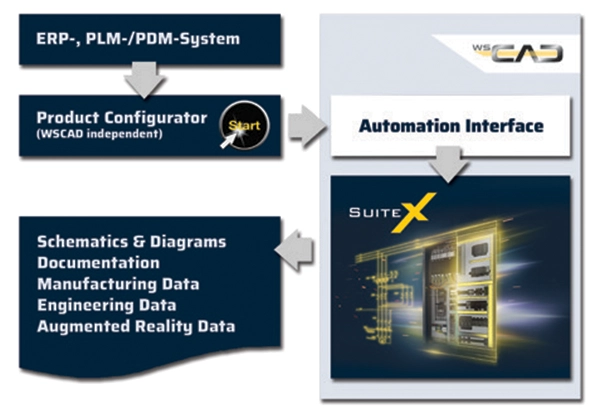
The Management and Development at WSCAD recognised the need immediately and agreed to create, in close cooperation with Caterpillar, an interface to which the currently used product configurator can dock and initiate the fully automatic preparation of plans and documentation through the WSCAD software. The result, a year later, is now a new add-on product called the Automation Interface. This upstream interface to the WSCAD software is the connection to any product configuration system on the market. Whether the configurator is in the ERP or PDM system or a special software program such as that from Acatec, or the custom development of Caterpillar, is totally irrelevant. At the touch of a button, the configured product with all the relevant data for the electrical engineering process is passed to the WSCAD software and converted into a valid command language for the WSCAD software.
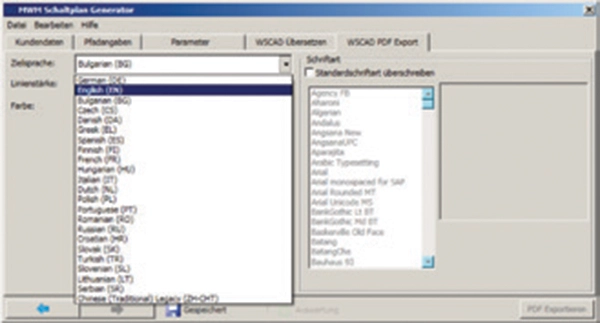
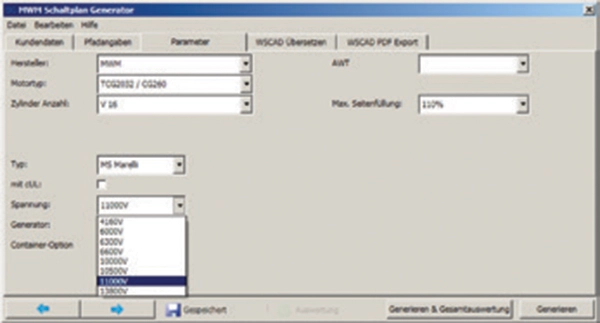
In addition to the technical parameters, even the target language of the documentation is set in the configurator and sent to the WSCAD software to generate the electri-cal engineering documentation at the touch of a button.
Automated Documentation in Silent Mode
As if by magic, the complete documentation is created effortlessly. It is possible to do exactly what can be done manually with WSCAD. The entire process runs as a background process in “silent mode“. The WSCAD software does not need to be started, and even the users themselves need not be present during the creation of the plans. Configuring rather than programming – or software controlling software – a step toward Industry 4.0 or the Internet of Things in engineering. If time is scarce, the requisite knowledge for connecting any configurator to the Automation Interface can be procured from WSCAD as a service.
Configuring instead of designing: All electrical plans, including the documentation of several hundred pages for an individually configured CHP are created in the background in the WSCAD software directly from within the product configurator at the push of a button within seconds.
We now have more resources available for design and do not have to outsource design tasks to the previous extent. In addition, we can focus more on special solutions for upcoming projects that are not standard and require a major design effort.
This enables us to win new orders.
From Testing to Production: Automated Design at the Touch of a Button
Following the successful completion of the test phase, the new type of electrical design at Caterpillar Energy Solutions is now being introduced in the production phase. Plans, including documentation, are created in the set languages at the touch of a button. The generated PDFs and lists are placed in the predefined directories. “We can now plan without having to be familiar with WSCAD“ says Andreas Dworzsak. “Just push the button, and WSCAD generates the complete documentation for any configuration in the desired language. So we now have more resources free for design and do not have to outsource design tasks to the previous extent. In addition, we can focus more on special solutions for upcoming projects that are not standard and require a major design effort. This enables us to win new orders.”
In addition to the technical parameters, even the target language of the documentation is set in the configurator and sent to the WSCAD software to generate the electrical engineering documentation at the touch of a button.
The Automation Interface at a glance
- Interface between a product configurator and WSCAD software.
- Freely selectable product configurator such as SAP, Teamcenter, Acatec or proprietary developments.
- Complete plans, including documentation, are created for standardised scopes in virtually no time at all and at the touch of a button.
- The entire process runs as a background process in “silent mode”.
- No interaction required by the user.
- Complete plans, including documentation, are created for standardised scopes in virtually no time at all and at the touch of a button.
- Plan preparation overnight.
- Special support services available from WSCAD for the introduction and implementation.
Download Case Study
This case study is intended exclusively for your personal use. Any reproduction or publication requires our express written consent.


