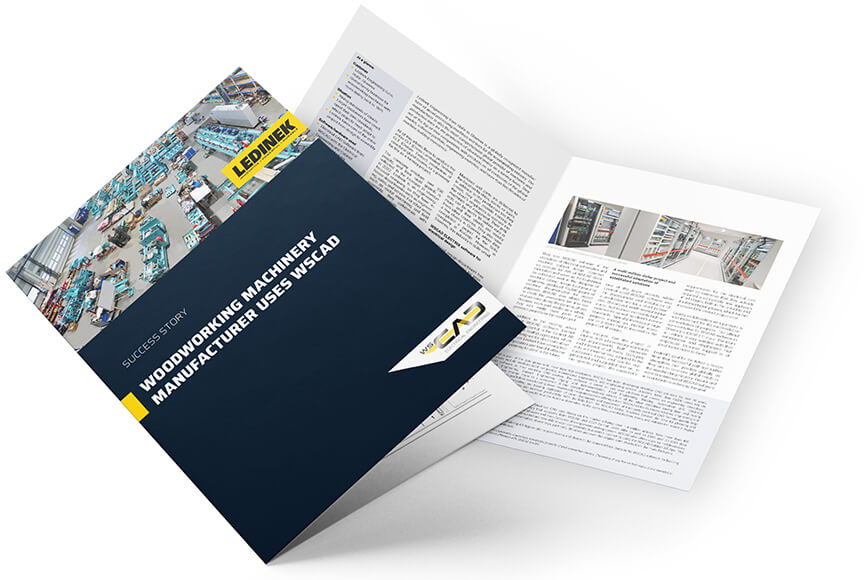
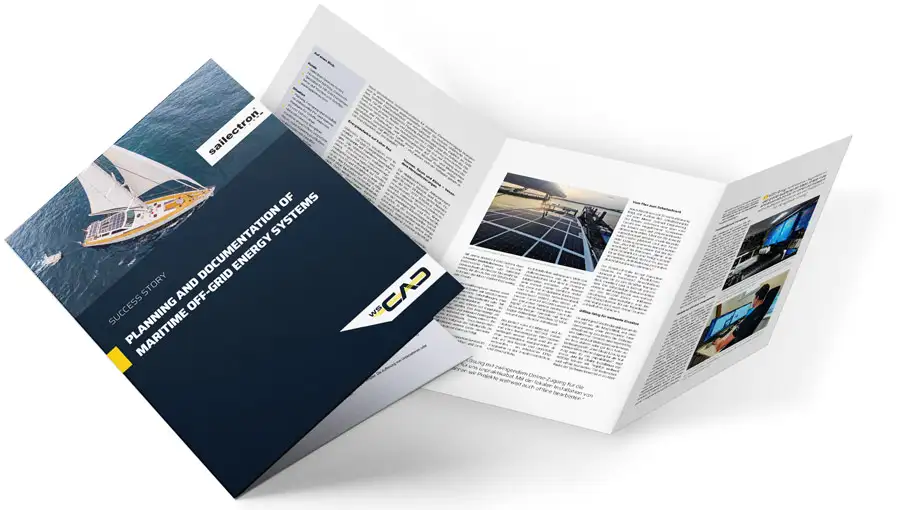
Maximum independence: WSCAD enables global projects without any cloud dependency – fully operational even at sea.
Highly specialized systems integrators working in marine power supply operate in a technically demanding environment. They must ensure electrical safety while managing tight space constraints and complying with international regulations – all at once. For electrical design, documentation, and system assembly, a precise, flexible, and practice-oriented electrical CAD solution is indispensable. Based in Hundsdorf near Graz, Sailectron Services GmbH specializes in the design and installation of photovoltaic and battery systems for sailing and motor yachts. Managing Directors Lukas Vrecer and Michael Ponbauer show how their company uses WSCAD – and why the software has proven its value, especially in off-grid marine energy projects.
At a Glance
Customer
- Sailectron Services GmbH (Austria)
- Provider of off-grid power systems for yachts and vessels
- 12 employees
- www.offgridshop.eu / www.sailectron.com
Challenge
- Engineering and installation of custom PV and battery systems for vessels from 20 to 150 meters
- Compliance with complex maritime regulations and classification society requirements
- Severe space constraints and highly customized customer specifications
- International projects with frequent on-site work
Solution
- WSCAD with Electrical Engineering and Cabinet Engineering
Results
- Single engineering platform for schematics, control cabinet design, and documentation
- Reusable custom symbols and parts data reduce engineering time and errors
- Offline-capable electrical CAD supports global deployments without internet access
- Automated bills of materials (BOM) and 3D cabinet checks improve build quality and reduce installation risks
WSCAD disciplines and add-ons used:


Energy Independence on the Open Sea
Sailectron Services designs and installs off-grid energy systems, focusing on maritime applications. The company handles projects for vessels ranging from 20 to 150 meters in length and develops tailor-made solar power systems of similar scales. The primary objective is to cover onboard energy demand as independently as possible, without running a generator. To achieve this, solar modules, charge controllers, control units, batteries, and inverters are combined into one self-sufficient system. Typical inverter power starts at 5 kVA for smaller yachts and can scale up to 180 kVA and beyond. Sailectron employs around twelve people and belongs to a corporate group that also operates Offgridshop.eu, the Austrian distributor for Victron Energy, as well as a specialist retailer for solar, charging, and battery technology. In addition to consulting and sales, Sailectron Services provides the complete technical scope – from detailed electrical designing and cabinet manufacturing in Austria to final on-site installation and commissioning directly on the yachts. Projects often take the team to international marinas across the Mediterranean, Northern Europe, and overseas. “Our customers are often well-known shipyards, but also private owners or representatives of larger yachts,” explains Michael Ponbauer. “Many of them are technically savvy and want to understand their energy system. They expect detailed, transparent documentation.” This is precisely where WSCAD comes in: it forms the foundation for system and control cabinet design, and documentation of complex off-grid installations.
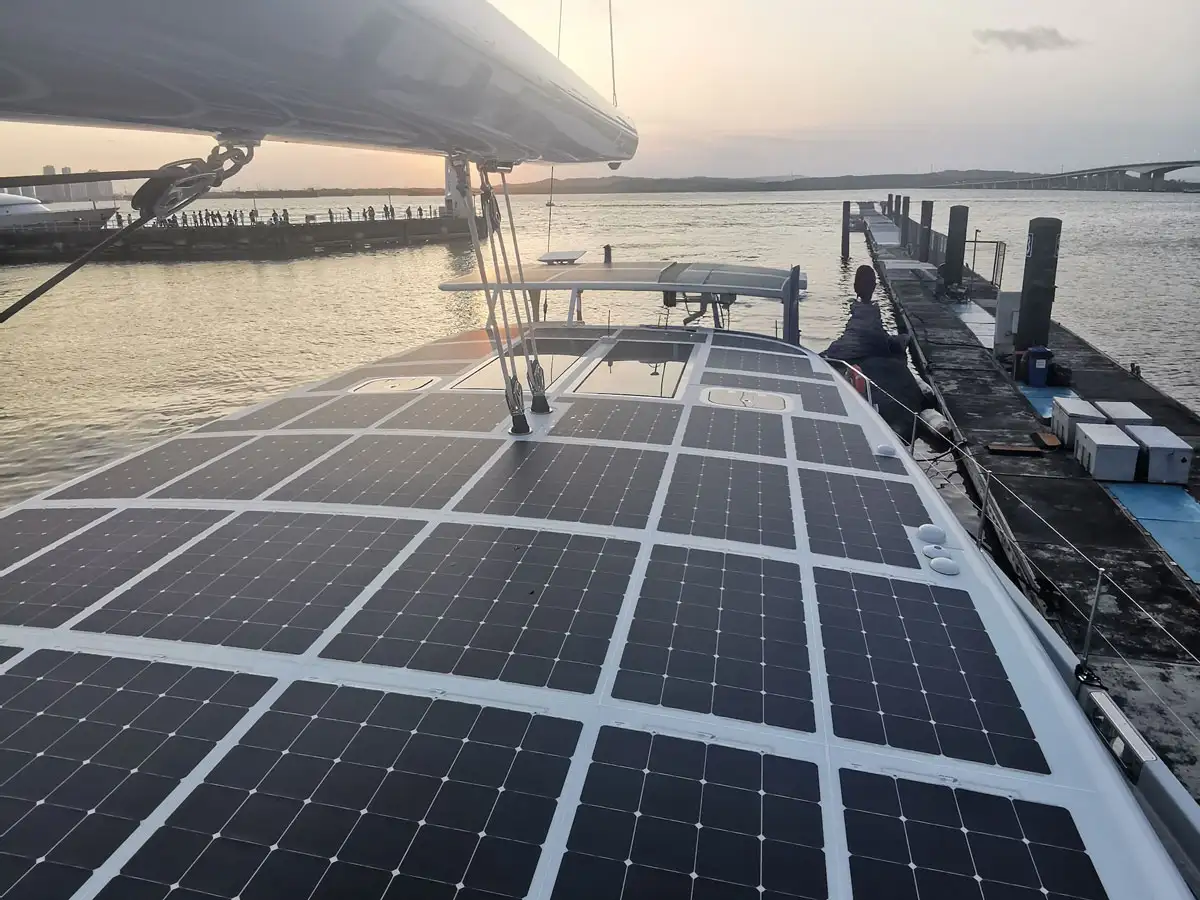
Optimised solar modules make use of even the smallest available surfaces on board to maximise energy generation.
Regulations, Space, and Climate – Special Maritime Challenges
Electrical engineering for marine environments is characterized by unique requirements. For vessels under 24 meters, standards such as ISO 13297 (electrical systems on small craft) apply; for larger vessels, further national regulations, fire safety standards, and classification society approvals come into play. Every installation in commercial shipping must pass inspection, and each component must carry certification. Physical constraints add another layer of complexity. Technical spaces onboard are tight, humid, and difficult to access. Control cabinet systems that would fit easily on a two-square-metre footprint on land must often be distributed among several small enclosures. “Corrosion, temperature fluctuations, and vibration make the selection of suitable enclosures and components particularly challenging,” says Ponbauer. “Overall, everything is simply more complex than onshore.”
Before each project begins, a Sailectron technician inspects the yacht on-site. Actual dimensions are captured using a 3D camera and fed directly into the WSCAD design process. This allows Sailectron to create wiring and layout diagrams that exactly match the real onboard environment.
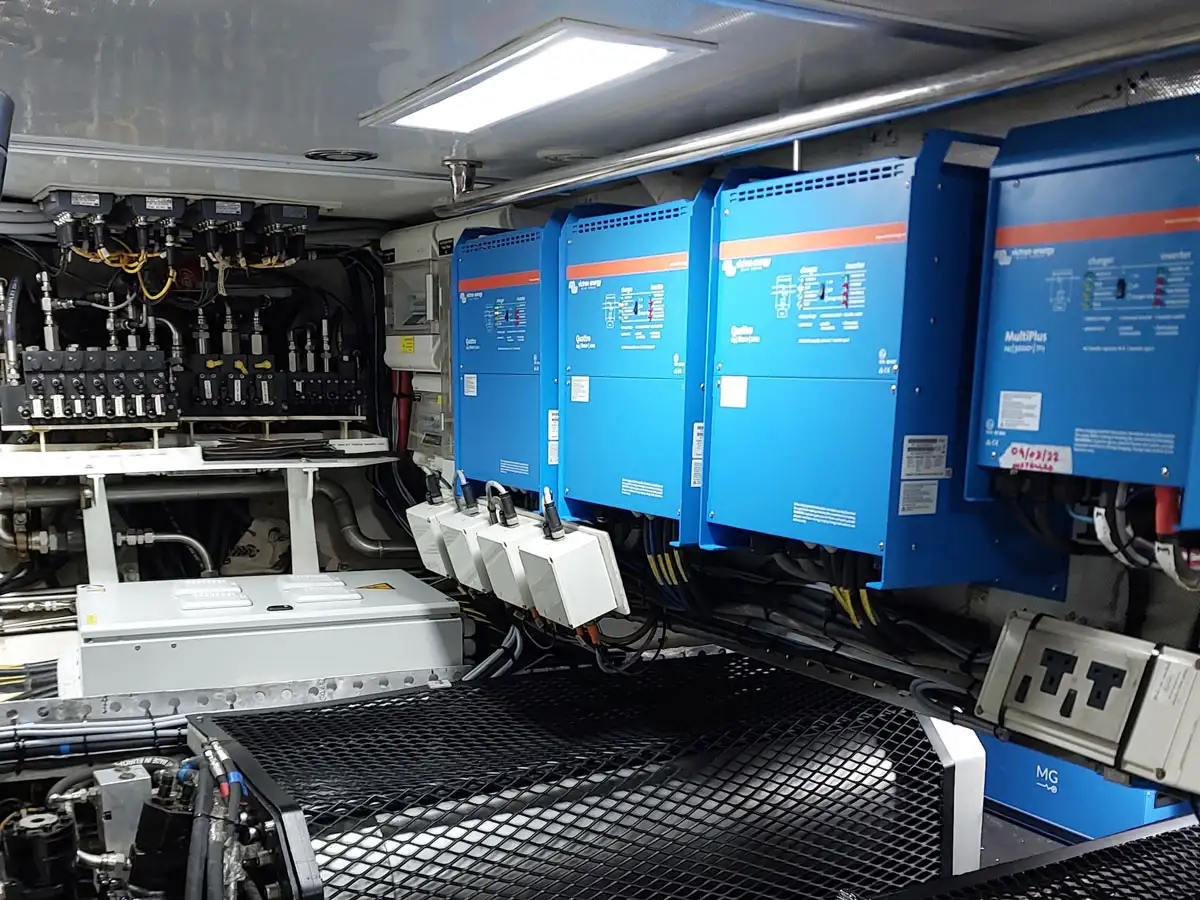
Tight spaces, corrosion, temperature fluctuations, and vibration, combined with national regulations, fire protection requirements, and classification society approvals, significantly increase the electrical engineering demands in the maritime sector compared to onshore installations.
A mandatory cloud service that requires constant connectivity would be impractical for us. WSCAD’s locally installed version allows us to work anywhere, anytime.
Structured Design – WSCAD in Action
Sailectron Services has been using the WSCAD electrical CAD platform for more than three years. Prior to that, the company worked with another electrical CAD system from a well-known market provider. Today, Sailectron relies on the Electrical Engineering discipline for electrical schematics and on the Cabinet Engineering module for enclosure design. All electrical schematics are created directly in WSCAD. Frequently used circuit sections – such as chargers, inverters, or battery management systems – are stored as macros and inserted into new projects at the click of a button. This significantly accelerates design work and minimises potential sources of error. During design, the software automatically determines cable lengths, rail drilling positions, and cable duct fill levels – ensuring precise fabrication data right from the start. A major advantage for Sailectron is the ability to build its own symbol and part libraries. Many specialised components for maritime energy systems are not included in standard catalogs. “We can easily create our own symbols, link them to part data, and store them in the WSCAD database,” notes Vrecer. “In this area, WSCAD clearly outperforms our previous system.” Depending on project complexity, using predefined, data-rich symbols saves between 30 minutes and two hours of engineering time per design section.
WSCAD’s part and material database can also be connected to the company’s ERP system, ensuring that all components used in the design are directly linked to procurement and inventory data – resulting in significant efficiency gains throughout quoting and purchasing processes.
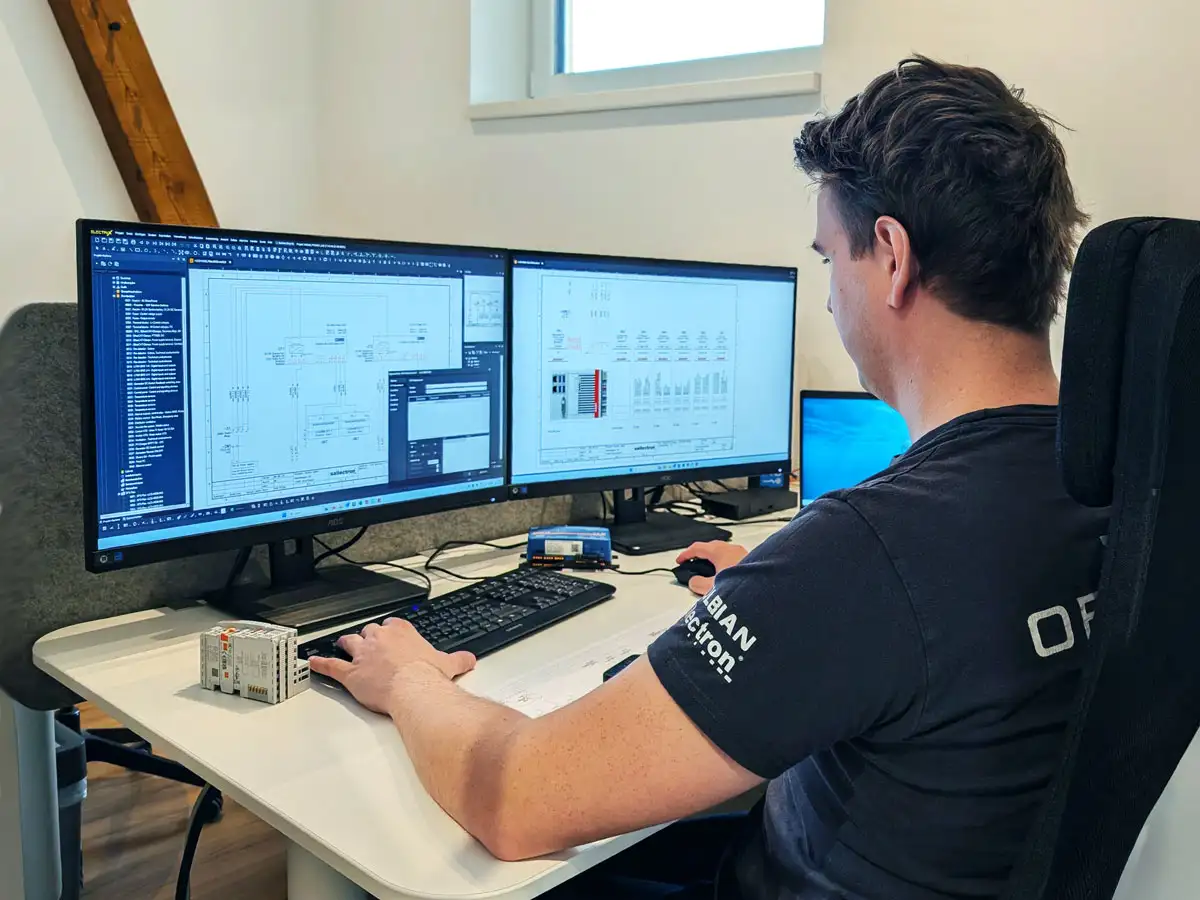
For electrical engineering, Sailectron Services uses the Electrical Engineering discipline in WSCAD; the ability to quickly create custom symbols and parts for specialized components is particularly valuable.
From Design to Control Cabinet
Once the schematic design is complete, cabinet layout follows using the Cabinet Engineering module. Components can be positioned with sub-millimetre precision, either manually or via Excel-based import. Engineers use the 3D view to verify spatial clearances and ensure that doors, mounting plates, and ventilation elements are properly positioned. “This really helps us during preparation,” says Ponbauer. “When a cabinet is built on shore and later installed onboard, nothing can be left to chance – every hole and cable entry must be exactly right.”
All cabinets are manufactured at Sailectron’s facility in Hundsdorf. The cabinets are then transported to the vessels, installed, and commissioned. Complete documentation – bill of materials, terminal diagrams, and cable labeling files – is automatically generated from WSCAD’s central data at the push of a button, in any required language. A very useful AI capability is the automatic translation of text content: The user specifies the target language, and the software translates the content automatically while taking established technical terminology into account. Tasks that previously required external translation agencies and took hours or days can now be completed in just a few minutes.
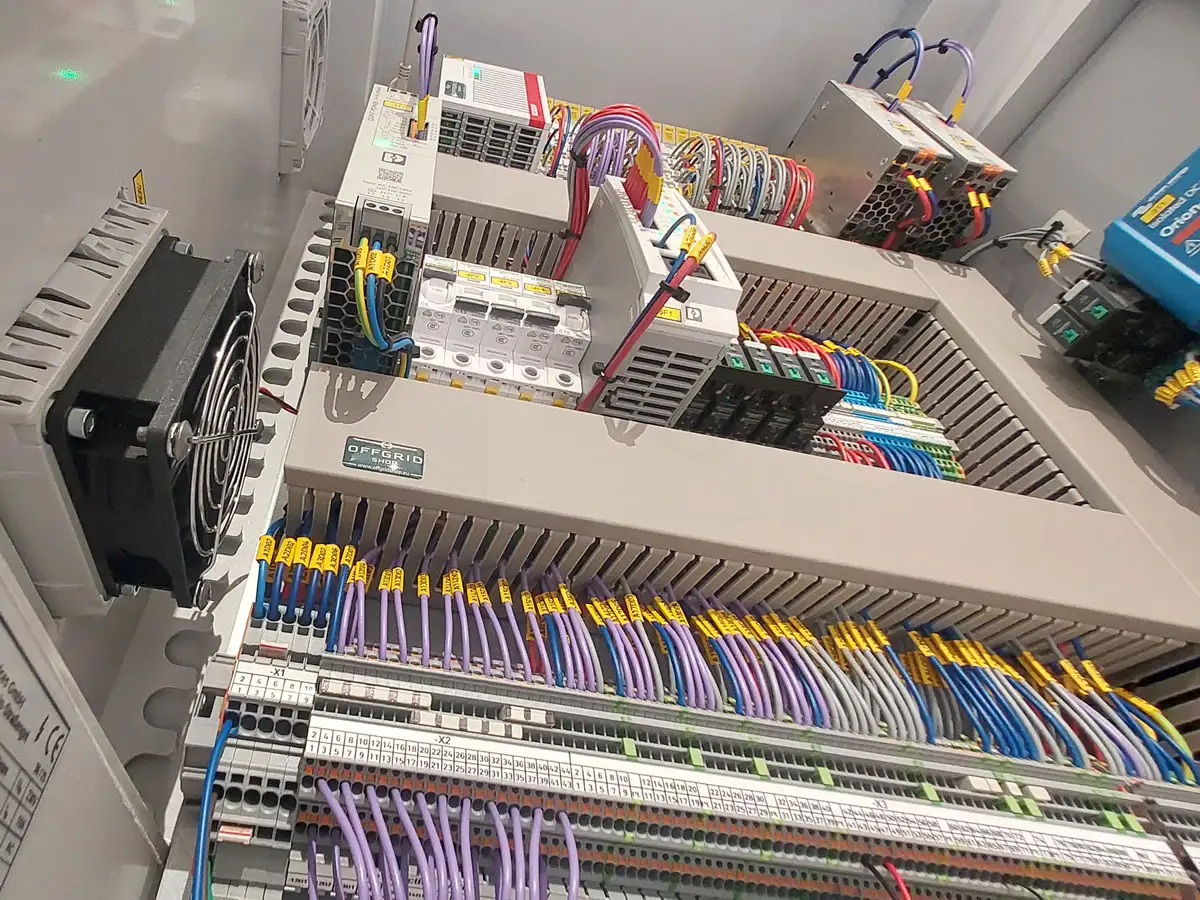
Control cabinets are manufactured by Sailectron Services in Austria and then transported to the vessels for on-site installation. Cabinet layout is created using the Cabinet Engineering module in WSCAD.
Functionally, WSCAD stands shoulder-to-shoulder with the major systems on the market – but its symbol & parts management and cost efficiency are unbeatable.
Productivity, Transparency, and the Power of AI
Migrating to WSCAD has produced measurable benefits for Sailectron Services. Design time has dropped significantly, errors are reduced thanks to integrated data consistency, and the transition from design to manufacturing is seamless. Documentation has also improved: every schematic, list, and label originates from a single dataset, ensuring clarity and version accuracy. “Functionally, WSCAD stands shoulder-to-shoulder with the major systems on the market – but its management and cost efficiency are unbeatable,” summarizes Ponbauer. A highlight for the team is the wide functionality and AI integration built directly into WSCAD. The new AI Copilot allows engineers to simply type commands like ‘generate a bill of materials and terminal diagram’. The results appear instantly, without digging through menus. This speeds up everyday work while making the system even more accessible and efficient for both designers and technicians.
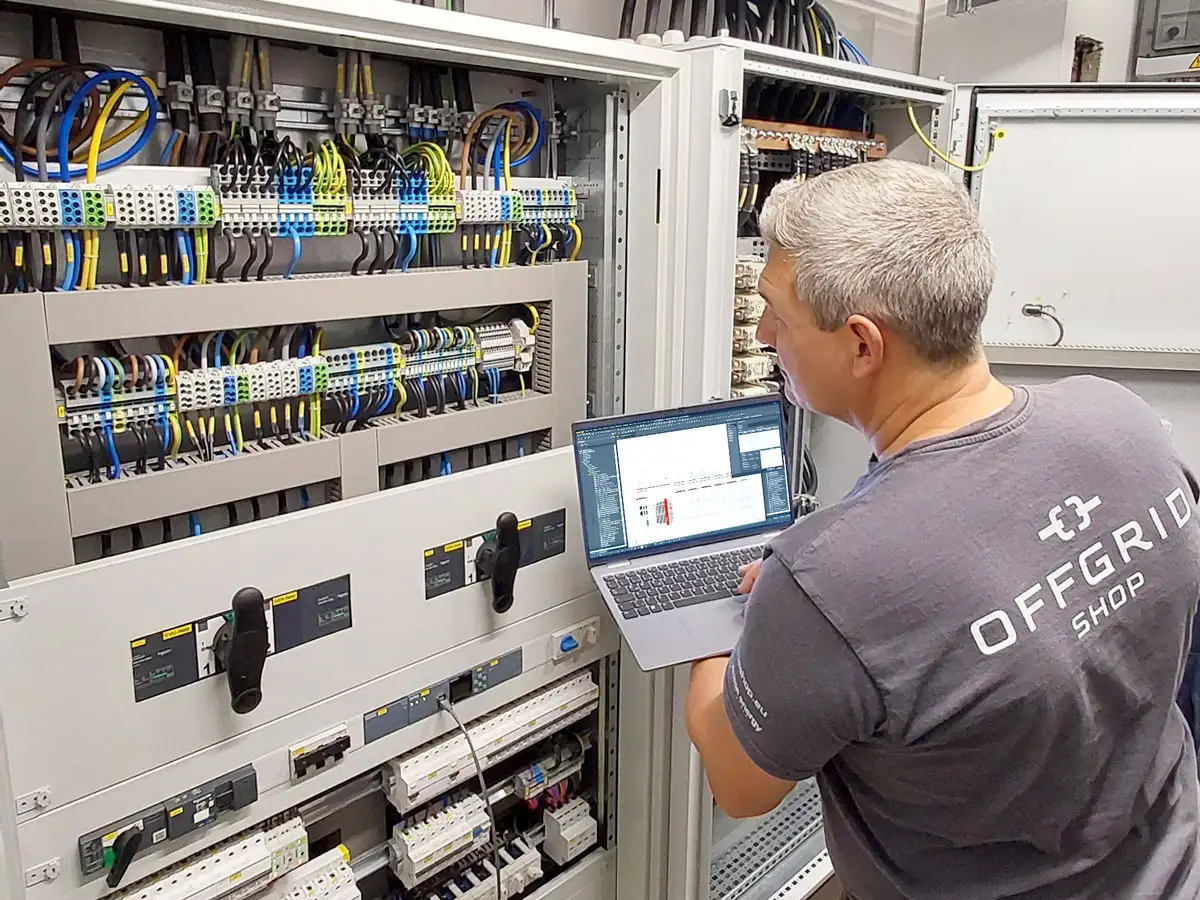
Onboard installation is carried out using the documentation previously generated in WSCAD, enabling a computer-assisted and highly efficient assembly process.
A Model for Modern Off-Grid Projects
The experience at Sailectron Services demonstrates that an integrated electrical CAD solution is not only crucial for industrial mass production, but also for project-driven companies with highly specialized requirements. Especially in off-grid applications – whether on yachts, expedition vehicles, or remote installations – precise electrical design, standardized documentation, and digital manufacturing data dramatically increase quality and reliability. WSCAD supports this workflow by integrating all engineering disciplines on a single platform – from wiring diagrams and cabinet layouts to bills of materials. For Sailectron Services, this integrated environment is daily practice. Their combination of technical expertise, hands-on manufacturing, and efficient electrical CAD engineering has made them pioneers of intelligent, sustainable energy independence at sea.
This case study is intended exclusively for your personal use. Any reproduction or publication requires our express written consent.