No lift-off without control cabinets
At Isar Aerospace, every component and every part of a launch vehicle is tested and validated on dedicated test stands. Each of these test stands is equipped with programmable logic controllers and individually configured control cabinets. In 2021 alone, the Munich based New Space company designed more than 20 control cabinets and built them in house, with the trend continuing to rise. A five person electrical engineering team manages this output using WSCAD’s electrical CAD software. Every electrical schematic and control cabinet is created within a single integrated platform, enabling productivity from day one.

At a glance
Customer
- Isar Aerospace Technologies GmbH, Munich
- Start-up service provider founded in 2018 with currently 220 employees (2022)
Situation
- Testing and validation of each component and part requires control cabinets with corresponding electrical diagrams
- Selection and introduction of an electrical CAD system for electrical planning and cabinet engineering
- Quick „go-live“ required, time is one of the critical success factors
Software/hardware used
- Electrical CAD software from WSCAD with the Electrical Engineering and Cabinet Engineering modules
- Special ramp-up training with a coordinated mix of theory and practice
Benefit
- From day one, Isar Aerospace is using the electrical CAD software productively.
- Quick overview, reliable and always up-to-date plans
WSCAD disciplines and add-ons used:


Aerospace technology stands for the art of engineering under extreme conditions. In order to precisely launch satellites into space, for example, everything has to be right, and not just on launch day. Perfection is required in advance – for example, on the testing stations for parts and components.
The space race is experiencing a new edition. But unlike in the 1950s and 1960s, this time there are no political system blocks competing for pioneering achievements in space travel. „New Space“, as the experts call the commercialization of new space technologies and applications, is instead calling for privately financed start-ups. Around the world, they develop and build flexible launch systems and reusable launch vehicles that can cost-effectively deliver small and medium-sized satellites and satellite constellations into different Earth orbits.
SpaceX and Blue Origin are prominent clients – both US companies are planning to supply the remotest corners of the earth with fast internet from orbit. The European space ecosystem is also working on similar missions for new satellite constellations. There, Isar Aerospace positions itself as a launch service provider. Founded in 2018 by three rocket engineers in Munich, the company has quickly grown to over 220 employees. They come from more than 40 nations and aim to make access to space in a more flexible and cost-effective way and to advance commercial spaceflight in Europe.
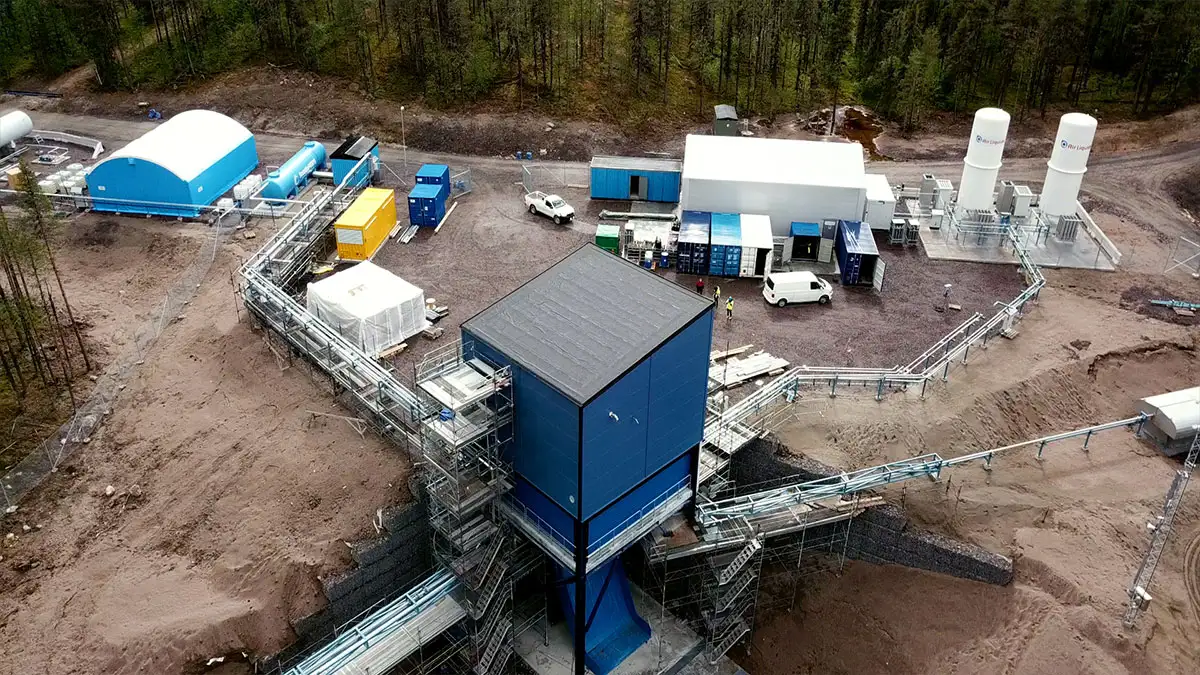
For large rocket engine tests, Isar Aerospace uses its own test and development site in the Kiruna space cluster in northern Sweden. Source: © Isar Aerospace
Missile tests: No lift-off without control cabinets
To ensure that everything runs like clockwork on future missions, the tests and validations of every component and part are of great importance. Each test stand has programmable logic controllers and individually configured control cabinets. Their size varies depending on the requirement. Small boxes measuring 30×30 centimeters are sufficient for testing subcomponents such as valves or batteries. To validate a rocket engine, however, larger test facilities are needed, such as those at the Esrange Space Center, located near the northern Swedish city of Kiruna. There, the development engineers at Isar Aerospace work with an entire network of different control cabinets that communicate with each other. In addition to PLCs, 24V power supply units, contactors, relays, frequency converters, motor controls and lots of safety technology are installed. „In 2021 alone, we designed more than 20 control cabinets and built them ourselves,“ reports Marc Rötzer, electrical designer at Isar Aerospace. Trend: still increasing.
Isar Aerospace’s electrical engineering department can only manage this output because it uses a professional electrical CAD application. The five-man team creates all circuit diagrams with WSCAD’s Electrical Engineering Software. In addition to some standard circuits, many individual developments have to be taken into account on the test stands. Macros speed up the design and help to avoid mistakes at the same time. As soon as the circuit diagrams have been drawn up, the WSCAD Cabinet Engineering module is used to construct the control cabinet. At this stage, it is already clear where which relays are located, which fuses have to be installed later and where top-hat rails and cable ducts run. Drilling data for metre goods such as mounting rails can be easily configured via dialog.
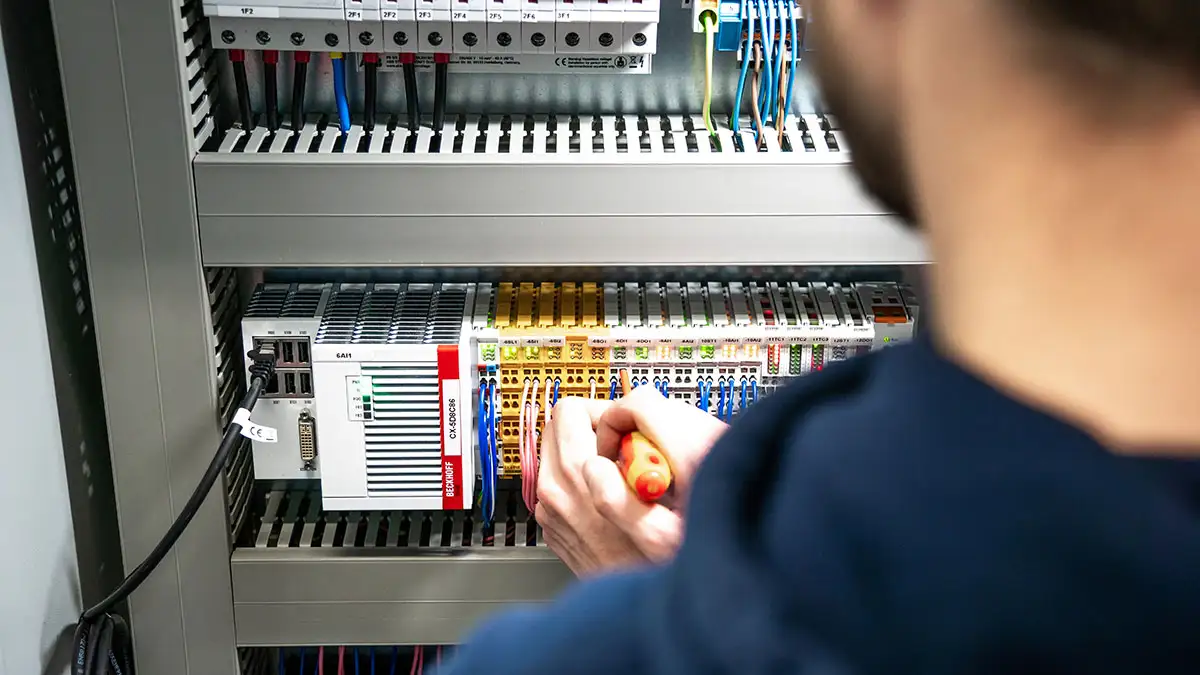

Assembly and wiring of the control cabinets designed with WSCAD are carried out internally at Isar Aerospace for quality assurance reasons. Source: © Isar Aerospace
In 2021 alone, we designed more than 20 control cabinets and built them ourselves.
3D visualization for more planning reliability
The software also helps to place individual components for the later production of the cabinets right or left side flush to an accuracy of tenths of a millimetre. The calculation of wire lengths including routing during the planning phase provides a noticeable productivity boost in the work processes. The filling degree of the cable ducts is also immediately visible. In the 3D view, components are checked for collisions using native 3D data based on actual component dimensions. You can quickly determine whether the cupboard doors are closing properly or not. In addition, the 3D control view with photorealistic images provides a better spatial overview.
Without additional software and costs, the control cabinet data generated in WSCAD can be exported via interfaces, for example to label terminal strips from Phoenix Contact. With several hundred terminal markings, this saves an immense amount of time and avoids manual errors. „We can’t and don’t want to do without such features any more,“ says Marc Rötzer. Wiring is currently still done exclusively on the basis of the circuit diagrams. „But we will soon be testing and using the Cabinet AR wiring app included in WSCAD.“
The Isar Aerospace designers obtain the empty control cabinets prefabricated with cut-outs for ventilators and holes for the operating elements. Assembly and wiring are carried out internally for quality assurance reasons. At the Ottobrunn site near Munich, cables and components are available for this purpose in a specially equipped electrical warehouse.
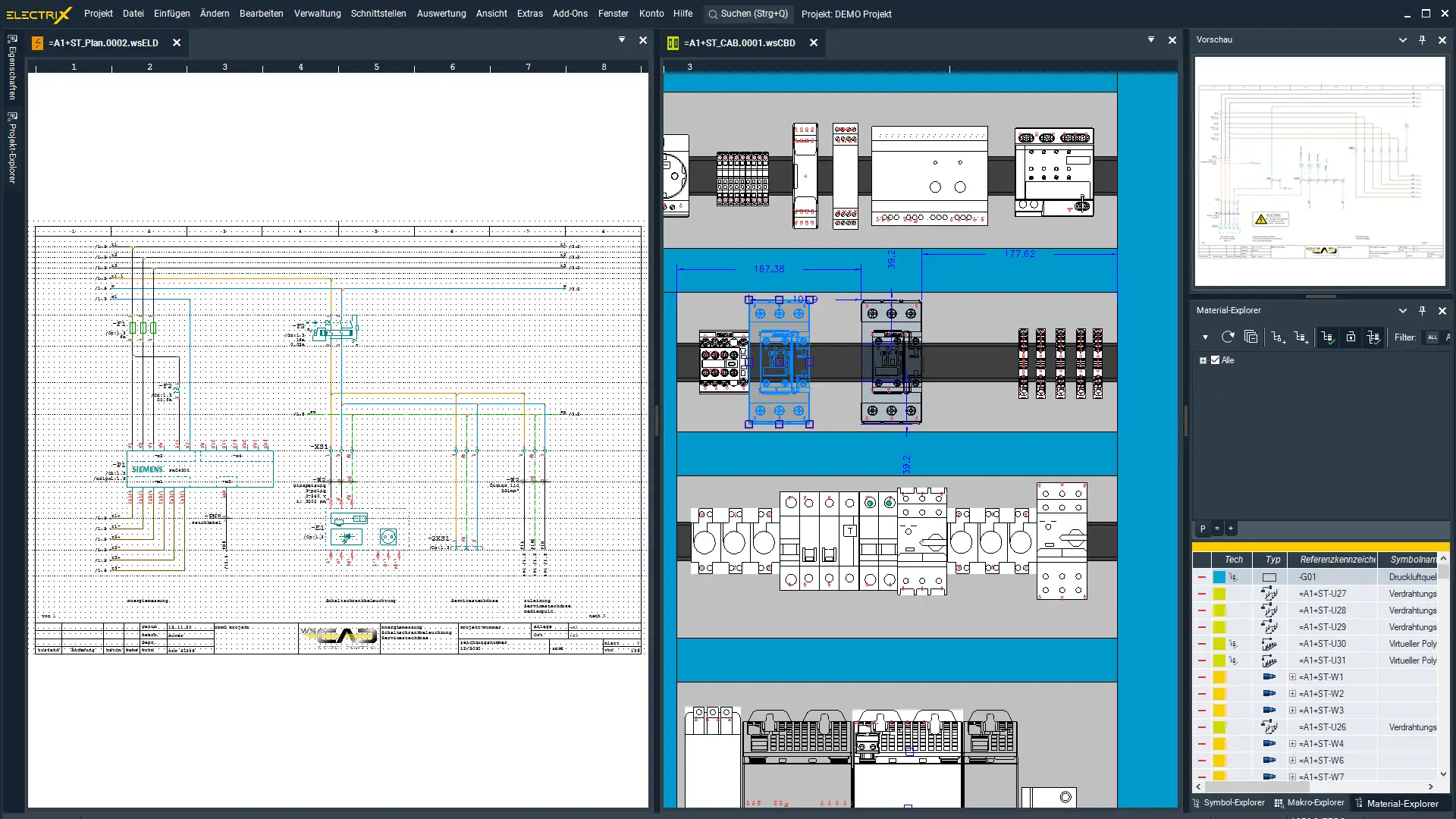
Isar Aerospace uses the professional electrical CAD application from WSCAD for the electrical engineering planning and design of circuit diagrams and control cabinets for the test stands.
Our learning curve was enormous. We were able to work independently and highly effectively with WSCAD‘s software after a very short time.
Professional turbo training: mix of theory and practice
When Isar Aerospace launched in 2018, every electrical engineer in the company had experience with a different electrical CAD software. The team therefore put the different solutions to the test and evaluated the scope of services and costs. At the end of the selection process, three applications were shortlisted – the decisive factors for WSCAD were functionality and purchase price. A decision that no one has regretted from day 1.
Because time is an important success factor for any start-up, the introduction of WSCAD also had to be as quick and efficient as possible. Isar Aerospace completed a modified 5-day training course attended by all electrical engineers and also the PLC planners and programmers. In contrast to the usual training courses, many standard circuits were also created and saved as partial circuits in the form of macros. For example, for the PLCs, the article data stored in WSCAD by Isar Aerospace’s preferred PLC manufacturer did not exactly match Isar Aerospace’s requirements. They were easily changed during the training and saved as new item data and macros for quick use in the future. The training with its coordinated mix of theory and practice helped all course participants to use the many functions of WSCAD quickly and optimally right from the start.
After this dream start, Isar Aerospace is currently expanding its electrical engineering department and is looking for new colleagues. Jobs await you in an extremely exciting technical environment where you get to see a lot – from the very first planning, the preliminary discussions with the engineers, to the construction and subsequent installation, right through to the start-up.

As a launch service provider, Isar Aerospace from Munich develops and builds flexible launch vehicles for the cost-effective transport of small and medium-sized satellites and satellite constellations into Earth orbits. Source: © Isar Aerospace
This case study is intended exclusively for your personal use. Any reproduction or publication requires our express written consent.